What Is a Budget?
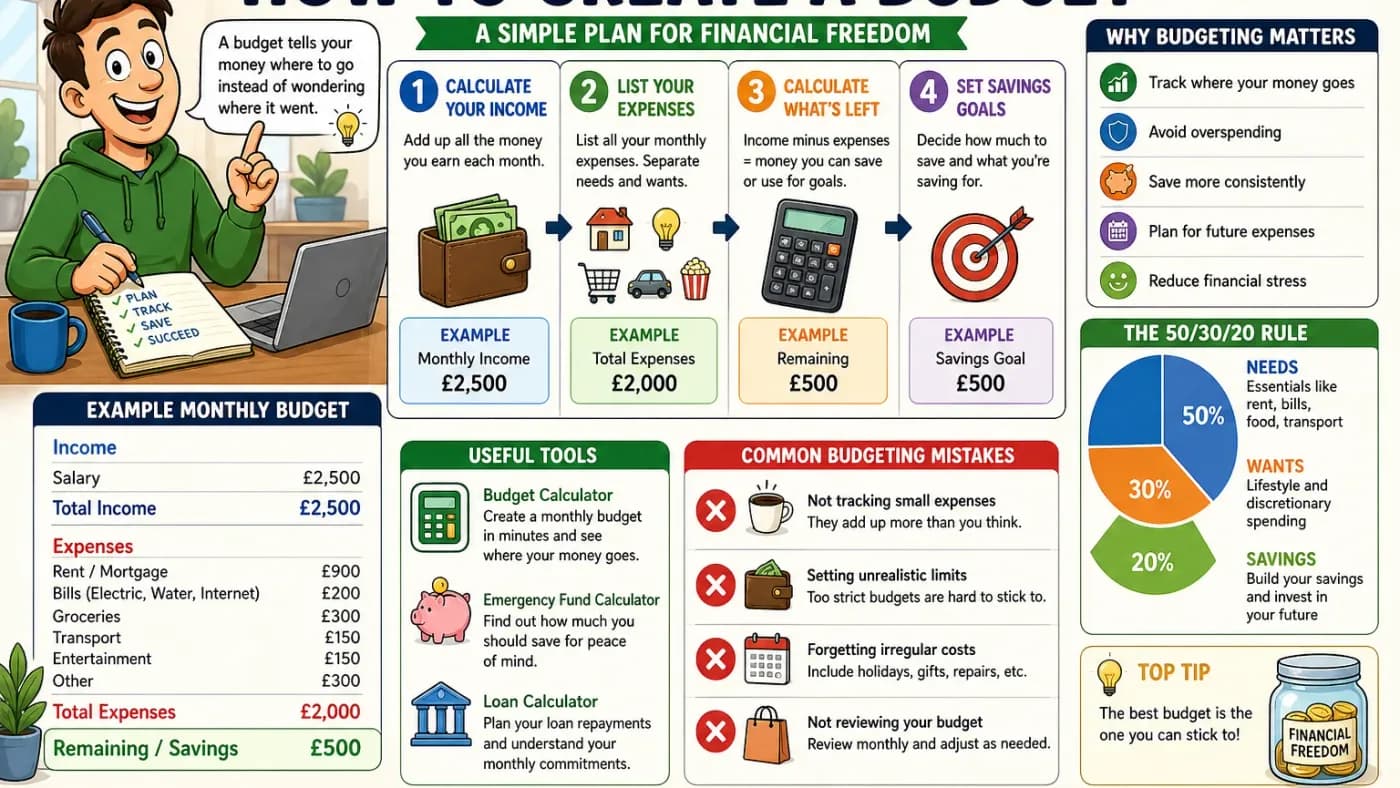
A budget is a simple plan that shows how much money you earn and how you spend it. It helps you control your finances, avoid overspending, and make sure you have enough money for important goals like saving or paying off debt.
Creating a budget is one of the most effective ways to improve your financial situation.
---Why Budgeting Matters
A budget helps you:
- Track where your money goes
- Avoid overspending
- Save more consistently
- Plan for future expenses
- Reduce financial stress
How to Create a Budget Step by Step
Step 1: Calculate Your Income
Start by working out how much money you receive each month.
This may include:
- Salary or wages
- Freelance income
- Side income
- Benefits or other payments
Example:
Monthly income = £2,500
Step 2: List Your Expenses
Next, list all your monthly expenses.
Split them into two categories:
Fixed expenses:
- Rent or mortgage
- Bills
- Subscriptions
- Loan payments
Variable expenses:
- Food
- Transport
- Entertainment
- Shopping
Example:
Total expenses = £2,000
Step 3: Calculate Your Remaining Money
Remaining = Income − Expenses
£2,500 − £2,000 = £500
This is the amount you can save, invest, or use for extra spending.
---Step 4: Set Savings Goals
Decide how much of your remaining money you want to save.
Common goals include:
- Emergency fund
- Travel
- Buying a home
- Paying off debt
The 50/30/20 Budget Rule
A simple budgeting method is the 50/30/20 rule:
- 50% needs (rent, bills, essentials)
- 30% wants (lifestyle spending)
- 20% savings
This provides a balanced approach without overcomplicating things.
---Example Budget
Monthly income: £2,500
- Needs (50%) = £1,250
- Wants (30%) = £750
- Savings (20%) = £500
Use the Budget Calculator
To create a budget quickly, use our Budget Calculator.
You can also use the Emergency Fund Calculator to plan savings, or the Loan Calculator to manage debt payments.
---Common Budgeting Mistakes
Not Tracking Small Expenses
Small purchases can add up quickly over time.
Setting Unrealistic Limits
If your budget is too strict, it’s harder to stick to.
Forgetting Irregular Costs
Include occasional expenses like holidays or repairs.
---Frequently Asked Questions
What is a budget?
A budget is a plan for managing your income and expenses.
How do I start budgeting?
Track your income, list your expenses, and set spending limits.
What is the best budgeting method?
The 50/30/20 rule is a simple and effective starting point.
Why is budgeting important?
It helps you control spending and achieve financial goals.
---Conclusion
Creating a budget is one of the simplest ways to take control of your finances. By tracking your income and expenses, you can make better decisions and build long-term financial stability.
For an easy way to get started, use the Budget Calculator.