
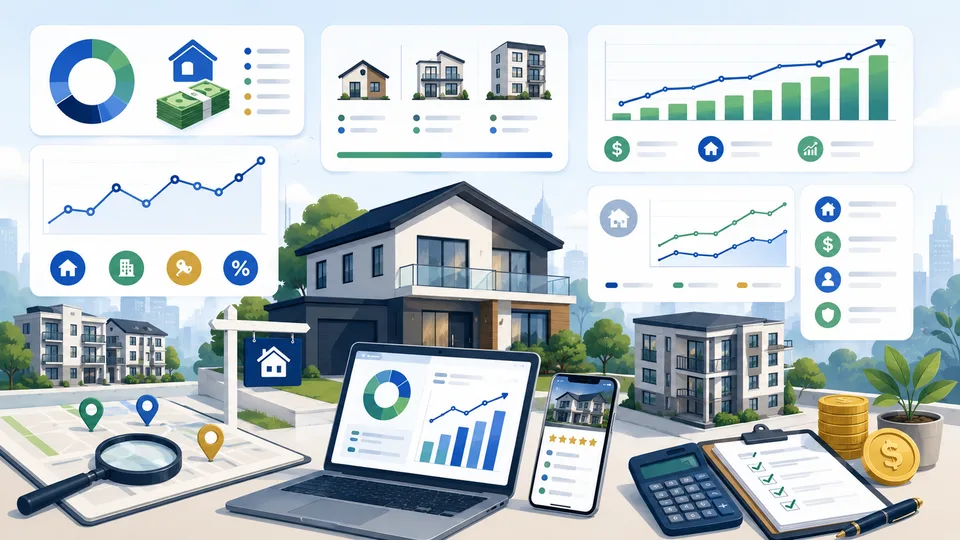
Property Investment Usually Looks Simpler From The Outside
I've found that property investment looks straightforward from the outside and becomes considerably more nuanced once you're working with real numbers rather than assumptions. A lot of people view property investment primarily through rising house prices or rental income headlines. On the surface, the idea can seem straightforward: buy property, collect rent and build long-term wealth.
In practice though, property investing usually becomes much more nuanced once financing, maintenance, vacancies and cash flow pressures enter the picture.
I think this is one reason why some property investments feel surprisingly stressful even when the underlying asset value is technically increasing.
ROI In Property Is More Than House Price Growth
Many people initially focus heavily on appreciation alone when evaluating investment property.
But long-term returns often depend on multiple interacting factors:
- rental income
- mortgage costs
- maintenance expenses
- vacancy periods
- taxes and fees
- financing structure
- local demand
A property increasing in value does not automatically mean the investment itself performs well financially in the short or medium term.
Supporting article:
Cash Flow Often Determines Sustainability
Cash flow is one of the most important realities in property investing because bills and financing obligations continue regardless of market optimism.
Positive cash flow generally means rental income exceeds ongoing expenses.
Negative cash flow means the owner regularly contributes additional money to maintain the property investment.
One thing that surprised me when comparing different investment properties was how much psychological pressure poor cash flow can create even when investors remain optimistic about future appreciation.
Supporting article:
Why Cash Flow Matters More Than Property Value
Hidden Costs Quietly Change Investment Performance
Property investment costs are often underestimated because many expenses appear irregular or indirect.
Examples include:
- maintenance and repairs
- insurance
- legal fees
- letting agency costs
- compliance requirements
- vacancy periods
- unexpected repairs
- interest rate changes
Individually these costs may seem manageable. Combined over long periods though, they can significantly affect profitability.
Supporting articles:
Mortgage Structure Changes Investment Risk
Financing decisions strongly influence property investment behaviour.
Interest rates, mortgage terms and leverage levels affect:
- monthly cash flow
- risk exposure
- profitability
- financial flexibility
- stress levels during downturns
A heavily leveraged property may perform well during strong markets while becoming financially uncomfortable during higher interest rate environments.
Supporting article:
Should You Overpay Your Mortgage?
Vacancy Periods Matter More Than Many Investors Expect
Rental property calculations often assume consistent occupancy, but vacancies can disrupt cash flow significantly.
During vacancy periods:
- mortgage payments continue
- maintenance costs continue
- insurance still applies
- utility costs may remain
- cash flow may turn negative
This is one reason stronger emergency reserves become important for landlords and property investors.
Supporting article:
How Vacancy Periods Affect Landlords
Rental Yield And Long-Term Appreciation Are Different Ideas
Some property investments perform strongly because of rental income. Others depend more heavily on long-term appreciation.
These strategies can produce very different investor experiences.
High-yield properties may generate stronger immediate cash flow but slower appreciation.
Lower-yield properties in expensive areas may depend far more on future value growth.
Neither approach is automatically correct. The balance depends on:
- risk tolerance
- cash flow needs
- market conditions
- financing structure
- investment goals
Property Ownership Can Create Lifestyle Pressure Too
Property investing discussions often focus entirely on returns while ignoring lifestyle pressure.
Large property obligations can create:
- financial rigidity
- stress during downturns
- reduced flexibility
- maintenance burden
- higher recurring costs
This is one reason terms like “house poor” became common in personal finance discussions.
Supporting articles:
Useful Calculators For Property Investment Planning
Property decisions become easier to evaluate realistically when financing and cash flow are measurable.
- Rental Yield Calculator
- ROI Calculator
- Mortgage Calculator
- Mortgage Overpayment Calculator
- Cash Flow Calculator
- Stamp Duty Calculator
- Property Investment Calculator
These tools are most useful when used with conservative assumptions rather than optimistic market expectations.
Good Property Investments Usually Feel Sustainable
One interesting thing about strong property investments is that they often feel financially manageable rather than constantly stressful.
Healthy investments usually create:
- stable cash flow
- manageable financing
- reasonable maintenance expectations
- financial flexibility
- long-term resilience
That does not mean property investing becomes risk-free. Markets still fluctuate and unexpected costs still appear.
But sustainable investments usually rely less on perfect future appreciation and more on solid underlying financial structure.
Where To Start
If you are evaluating property investment opportunities, start by focusing on realistic cash flow and long-term sustainability rather than optimistic projections alone.
Focus first on:
- cash flow
- rental yield
- financing costs
- maintenance expectations
- vacancy risk
- long-term affordability
The supporting articles and calculators throughout this guide are designed to help make property investment decisions feel more financially grounded, practical and realistic instead of relying purely on housing market optimism.