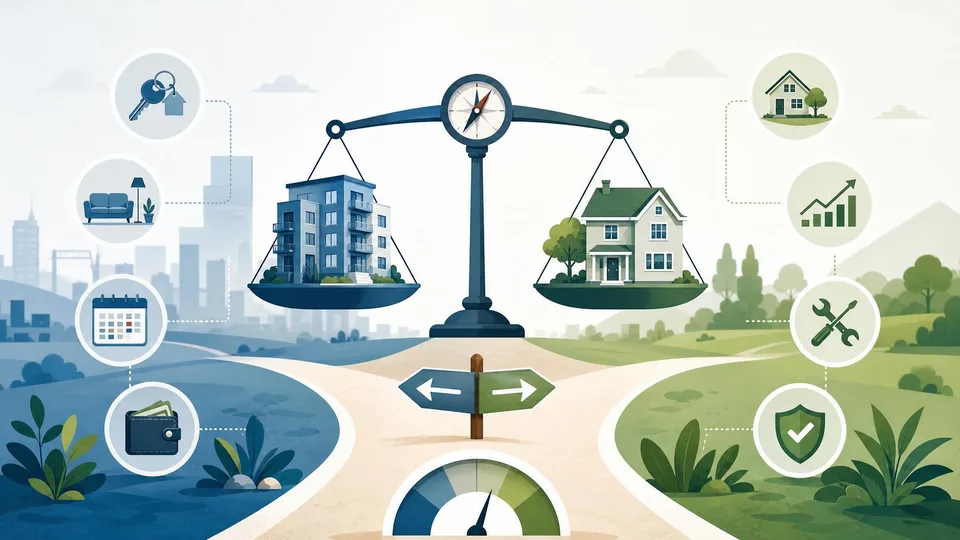
My thinking on renting versus buying has shifted considerably as I have run the actual numbers across different scenarios and time horizons.
Property discussions online often drift toward extremes surprisingly quickly. Either property is presented as a guaranteed path to wealth or it is described as a financial trap nobody should touch. The reality is usually much less dramatic and much more dependent on timing, cash flow, stress tolerance and ordinary day-to-day management.
I think one reason property creates such strong opinions is because it sits somewhere between investment, lifestyle choice and emotional identity. A house is rarely just numbers. People attach security, status, stability and future expectations to it, which makes purely rational decision-making difficult.
I remember speaking to somebody years ago who proudly explained how much their home had increased in value over the decade while simultaneously admitting they were permanently stressed about monthly payments. On paper they looked financially successful. In practice they barely had breathing room.
Property Costs Hide in the Details
One thing almost everybody discovers eventually is that property ownership contains far more friction than the optimistic calculations suggest at the start.
People budget for mortgages but underestimate maintenance. They calculate rental income while quietly assuming tenants will never leave unexpectedly. They focus heavily on headline property value while ignoring how expensive poor cash flow can feel month-to-month.
Buy-to-let discussions especially tend to skip over the boring realities. Repairs rarely arrive at convenient moments. Boilers do not politely fail during financially comfortable periods. Vacancy gaps create stress surprisingly quickly once fixed costs continue without rental income offsetting them.
The strange thing is that none of this necessarily makes property a bad investment. It simply makes it a more human and operational investment than internet discussions sometimes imply.
The Bank Balance Feels Different From the Valuation
This is probably one of the biggest lessons people learn after living with large financial commitments for long enough.
Paper wealth and daily financial comfort are not identical experiences.
I have known homeowners whose properties increased significantly in value while their actual lifestyle felt financially tight constantly. High mortgage payments, maintenance costs and rising bills consumed most of their monthly flexibility.
Meanwhile some people with lower-value properties and stronger cash flow slept far better at night.
This is partly why being “house poor” becomes psychologically exhausting. A home starts consuming so much income that everything else feels constrained around it. Holidays become stressful calculations. Emergencies become frightening. Career flexibility shrinks because financial obligations leave little room for risk.
A Home or Investment Still Affects Daily Life
Rent vs buy arguments online often become oddly tribal because both sides reduce complicated personal situations into universal rules.
But housing decisions are heavily shaped by personality, location, life stage and emotional priorities.
Some people value flexibility deeply and hate the idea of being tied to one location. Others crave stability and genuinely enjoy owning and improving a property long term. Neither preference is automatically financially irrational.
I think people also underestimate how emotionally reassuring predictable housing can feel. Even financially disciplined people sometimes accept lower theoretical investment returns in exchange for stability and peace of mind.
Property Is Not as Passive as It Looks
Another misconception is the idea that property generates effortless income automatically once purchased.
Good tenants matter enormously. Maintenance management matters. Financing matters. Timing matters. Regulations change. Interest rates change. Local markets change.
I once spoke to a landlord who described rental property as “a part-time customer service job disguised as an investment.” That description honestly felt more accurate than most online investment content.
The people who usually cope best with property ownership are not necessarily the people chasing maximum theoretical returns. Often they are simply the people who prepared realistically for interruptions, repairs and slower periods.
Small Property Costs Can Grow Over Time
Property creates interesting financial psychology because leverage magnifies outcomes both ways.
When markets rise steadily, leverage feels brilliant. When costs increase unexpectedly or rates rise sharply, the emotional experience changes quickly.
This is where maintenance costs and cash reserves suddenly stop feeling boring. Small recurring issues become expensive surprisingly quickly once multiple costs overlap simultaneously.
I think this is also why ROI and rental yield get misunderstood so often. Simple headline percentages rarely capture the emotional reality of risk, effort, financing pressure and maintenance unpredictability underneath them.
Risk Tolerance Changes the Answer
People often debate this topic as if there is one universally optimal answer when in reality psychology matters heavily.
Mathematically, investing may outperform mortgage overpayments under certain conditions. Emotionally, becoming debt-free earlier can feel enormously valuable for some personalities.
I have noticed financially anxious people often experience real quality-of-life improvements from reducing debt exposure even if spreadsheets suggest slightly higher theoretical returns elsewhere.
Personal finance decisions rarely exist purely inside mathematics. Emotional resilience matters too.
Success Stories Often Skip the Awkward Parts
This is something worth remembering whenever property investing gets presented as endlessly smooth online.
People usually discuss successful sales, rising values and profitable periods far more enthusiastically than repair disasters, bad tenants, empty months or stressful refinancing conversations.
That creates survivorship bias. Newer investors end up comparing their messy reality against heavily edited success narratives.
The same property investment that looks fantastic on paper can still create years of stress depending on timing and personal financial resilience.
Keep the Decision Sustainable
Property is neither magical wealth creation nor automatic financial disaster. It is simply a large long-term financial commitment with both practical and emotional consequences.
The people who usually handle it best seem to be the ones who approach it realistically rather than romantically. They expect maintenance. They value cash flow. They understand that flexibility, stress levels and quality of life matter alongside appreciation percentages.
And honestly, once you stop viewing property purely as a status symbol or guaranteed investment shortcut, it becomes much easier to make calmer and more sustainable decisions around it.
If you are evaluating a property investment, the rental yield calculator helps you work out the gross and net yield so you can compare properties on a like-for-like basis.
Related calculator: Use our Rent vs Buy Break-Even Calculator to compare long-term renting against buying.