
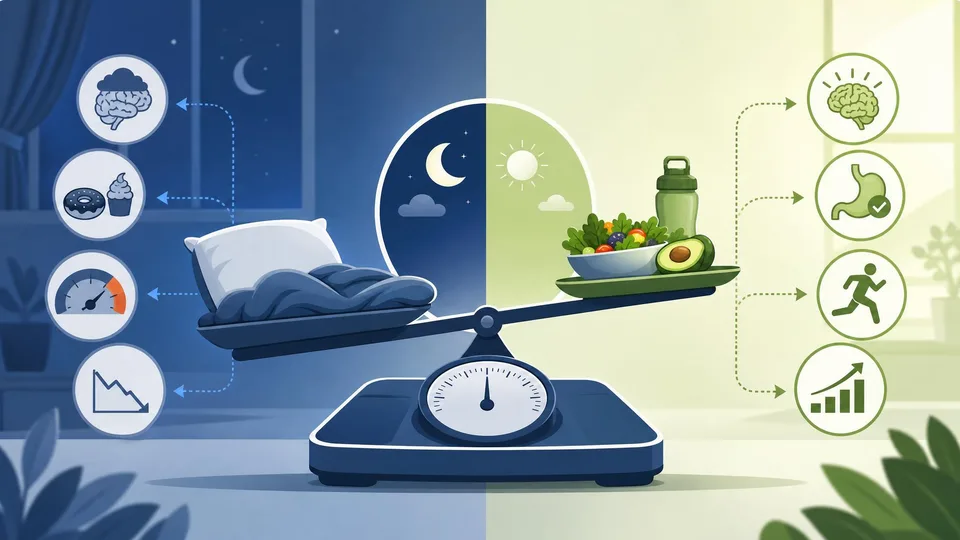
I noticed my weight loss stalling during a period when my sleep had become genuinely disrupted, which prompted me to look more carefully at the connection.
Health advice online has a strange habit of making the human body sound much simpler than it actually is. Everything becomes reduced into neat little slogans. Sleep more. Stress less. Drink water. Exercise regularly. Technically none of that advice is wrong, but it also skips over the reality that human beings are inconsistent, distracted and usually trying to function while tired.
I think most people only start paying serious attention to recovery, stress or sleep once something starts feeling noticeably wrong. Before that point, it is easy to treat fatigue as background noise. You assume being exhausted all the time is just adulthood. You rely on caffeine harder each month. You tell yourself you will “catch up properly at the weekend” even though the weekend disappears into errands and screens.
Years ago I went through a phase where I convinced myself I was functioning perfectly well on terrible sleep because I was still technically getting things done. Looking back now, I was operating in a permanently dulled state without fully noticing it. Focus became worse. Motivation became unpredictable. Recovery from exercise slowed down. Small problems felt emotionally larger than they should have.
The Body Notices More Than You Think
One of the frustrating things about health is that the body often adapts just enough to let bad habits continue for a surprisingly long time. That is partly why issues like chronic fatigue or dehydration build up so subtly. There is rarely one dramatic moment where everything suddenly collapses.
Instead, performance gradually worsens. Sleep quality drops slightly. Stress tolerance narrows. Cravings increase. Concentration fragments more easily. Recovery takes longer. People often respond by pushing harder instead of stepping back because slowing down feels emotionally uncomfortable.
I notice this especially with sleep. People treat sleep as optional recovery time rather than a core biological process affecting almost everything else. Then they become confused when poor sleep starts affecting hunger, energy, training quality, mood and decision-making simultaneously.
Stimulation Can Be Mistaken for Being Fine
This is probably one of the most socially accepted forms of self-neglect in modern life. Entire workplaces quietly run on sleep deprivation buffered by caffeine.
The strange part is that caffeine genuinely helps in the short term. That is why people rely on it so heavily. But there is a difference between feeling more alert and being properly recovered.
I remember having periods where coffee stopped feeling optional and started feeling medically necessary just to feel vaguely normal in the morning. That should probably have been a warning sign earlier than it was.
The problem is that stimulants can temporarily hide exhaustion well enough for people to keep extending unhealthy routines. Then eventually sleep quality worsens further, stress increases and recovery gets even weaker.
Pressure Has a Physical Cost
A lot of people still talk about stress as if it exists entirely inside the mind. In reality, prolonged stress changes physical recovery noticeably.
Poor sleep combined with chronic stress creates a surprisingly destructive cycle. Recovery slows down. Appetite regulation changes. Motivation becomes unstable. Exercise performance drops. People then become frustrated at themselves for lacking discipline when sometimes their body is simply overloaded.
I think this is why health advice focused purely on willpower often fails. Humans are not machines operating independently from emotional state, workload and recovery quality.
Someone sleeping properly with manageable stress levels will usually make better decisions almost automatically compared to somebody running on exhaustion for weeks.
Extreme Health Advice Can Distort the Basics
Another issue is that online wellness culture tends to reward dramatic solutions. Intense detoxes. Brutal routines. Hyper-optimised morning schedules.
Meanwhile the genuinely useful habits are often boring. Consistent hydration. Stable sleep schedules. Moderate exercise. Taking recovery seriously before burnout forces the issue.
That kind of advice sounds unimpressive because it does not promise rapid transformation. But biologically, the body responds surprisingly well to consistent basics repeated long enough.
Small Effects Become Noticeable Over Time
What makes poor recovery difficult to notice is that small deficits accumulate slowly. Losing one hour of sleep does not feel catastrophic. Mild dehydration rarely feels dramatic initially. A stressful week feels manageable.
But these things compound.
Eventually people adapt to feeling below their normal baseline and start treating exhaustion as their personality instead of a physiological warning sign.
I think many adults have forgotten what properly rested actually feels like.
Health Choices Happen in Real Life
There is also a strange guilt attached to recovery in modern productivity culture. Rest can feel undeserved. Taking recovery days can feel lazy even when the body clearly needs them.
That mindset becomes dangerous because recovery itself starts feeling emotionally stressful. People become unable to relax properly while simultaneously exhausted.
I have noticed that the healthiest long-term routines usually belong to people who stopped treating their body like an enemy to constantly negotiate with.
They still train hard or work hard, but they also understand that recovery is part of performance rather than the opposite of it.
Aim for Habits the Body Can Sustain
The frustrating reality is that many health problems build gradually enough that people normalise them for years. Poor sleep, chronic stress, mild dehydration and recovery issues often become background conditions instead of obvious warning signs.
Most people do not need perfect optimisation. They simply need enough recovery, sleep and consistency for the body to function the way it was designed to.
And honestly, once you experience what proper sleep, hydration and recovery actually feel like again, it becomes much harder to romanticise constant exhaustion afterwards.
If you want a starting point for tracking your own health metrics, the BMI calculator gives you one data point — though as this article explores, context matters as much as the number itself.
What to do next
Use the ideas above as a starting point — then connect them to your own numbers and related guides on Calc It Anything.
- Read the health metrics and wellness guide for the wider cluster.
- Compare with Sleep Debt Explained Without Wellness Industry Nonsense.
- Compare with Caffeine and Sleep Quality: The Trade-Off Most People Underestimate.
- Run the relevant calculator on this site with your own inputs before making a decision.
Related reading
- health metrics and wellness guide
- Sleep Debt Explained Without Wellness Industry Nonsense
- Caffeine and Sleep Quality: The Trade-Off Most People Underestimate
- Why Sleep Affects Almost Everything More Than People Want to Admit
For official UK context, see NHS guidance on sleep and tiredness.
Frequently asked questions
Can you fully catch up on sleep debt in one weekend?
A single lie-in helps short-term alertness, but chronic sleep debt usually needs consistent earlier bedtimes over weeks — not one recovery binge. Treat weekends as a supplement to a weekday schedule, not the whole plan.
How many hours of sleep do most adults need?
Many adults do best with roughly 7–9 hours, but individual need varies with age, training load, and stress. Track how you feel across two weeks of stable sleep rather than copying a generic target.
When should poor sleep push you to see a GP?
Book a check-up if exhaustion persists despite better habits, if you snore heavily or gasp at night, or if mood and concentration keep declining. Sleep problems can have medical causes worth ruling out.