
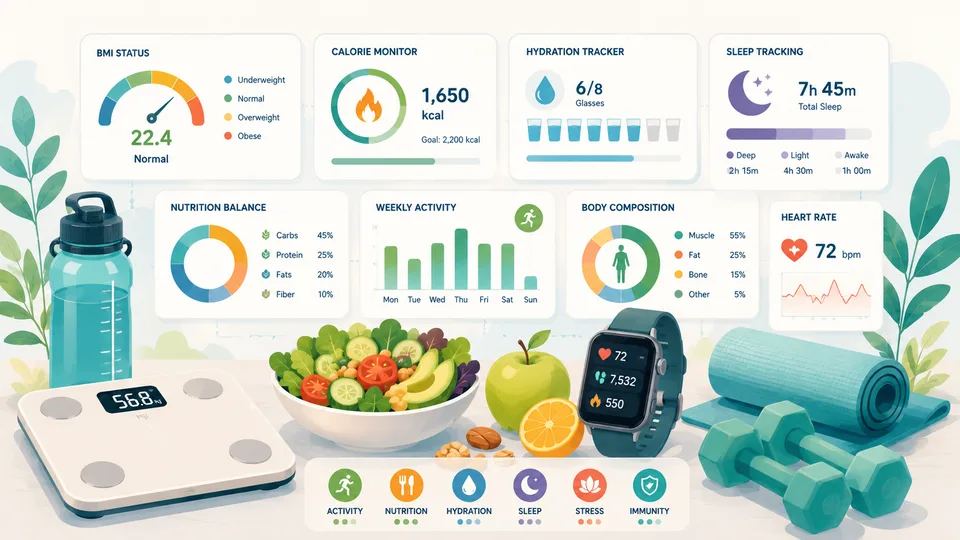
Health Is Usually Built Through Small Repeated Habits
I've spent time tracking health metrics obsessively and periods ignoring them completely, and neither extreme turned out to be the right answer. Most people already know the basics of staying healthy. Move more. Sleep properly. Eat reasonably well. Drink enough water. Reduce stress where possible.
The difficulty is rarely a lack of information. The difficult part is consistency.
Health is usually shaped less by extreme short-term effort and more by repeated everyday habits. Small decisions around movement, nutrition, sleep and recovery quietly compound over time.
This guide explains the practical side of health tracking and wellness metrics without turning everyday health into an obsession over numbers.
Health Metrics Are Tools, Not Judgements
People often develop unhealthy relationships with health numbers. Weight, BMI, calories, body fat percentage and smartwatch data can start feeling like constant judgement rather than useful information.
Most health metrics are simply tools. They provide estimates and trends that can help guide decisions.
No single number can fully describe someone’s health. Two people with similar BMI scores can have completely different lifestyles, fitness levels and medical histories.
Health tracking works best when it improves awareness without becoming psychologically exhausting.
Calories And Energy Balance Still Matter
Your body constantly uses energy. Breathing, digestion, movement, exercise and basic survival all require calories.
Daily calorie needs vary depending on factors such as:
- body size
- activity level
- muscle mass
- age
- sex
- general health
Understanding calorie needs can help with weight management, energy levels and nutrition planning. But calorie estimates are still estimates. They should be treated as useful guides rather than perfectly precise measurements.
Long-term patterns matter far more than individual daily fluctuations.
BMI Is Useful, But Limited
Body mass index, or BMI, is one of the most commonly used health metrics because it is simple and quick to calculate.
BMI can be useful for identifying broad population-level health trends, but it has limitations at the individual level.
For example, BMI does not distinguish between muscle and body fat. Someone highly muscular may appear overweight according to BMI despite being healthy.
That does not make BMI useless. It simply means it should be viewed alongside other information rather than treated as a complete health diagnosis.
Body Composition Often Matters More Than Scale Weight Alone
Two people can weigh the same while having very different body compositions, fitness levels and health markers.
This is why many people now focus more on overall body composition and lifestyle quality rather than obsessing over a single number on the scale.
Factors like:
- muscle mass
- body fat percentage
- waist measurements
- strength
- mobility
- energy levels
often provide a more useful picture of overall wellness than weight alone.
Hydration Affects More Than Most People Expect
Hydration influences energy levels, concentration, exercise performance and general wellbeing.
Many people underestimate how much mild dehydration can affect daily functioning. Fatigue, headaches and poor concentration are sometimes connected to inadequate fluid intake.
At the same time, hydration advice online often becomes exaggerated. There is no perfect universal water target because fluid needs vary based on climate, activity, body size and diet.
Hydration calculators can help estimate reasonable intake ranges without becoming obsessive.
Sleep Quietly Impacts Nearly Everything
Sleep is one of the most underrated health variables.
Poor sleep affects:
- recovery
- energy
- appetite regulation
- stress management
- exercise performance
- concentration
Many people try to improve health through increasingly complicated diets or supplements while consistently sleeping too little.
Good sleep habits often improve health outcomes more than people expect.
Smartwatches And Fitness Trackers Are Helpful — But Not Perfect
Modern fitness trackers provide enormous amounts of data: steps, heart rate, calorie estimates, sleep scores and recovery metrics.
This information can be useful because it increases awareness and creates behavioural feedback.
But fitness trackers are still estimating many of these values using algorithms and assumptions. Different devices often produce different results.
The goal should not be chasing perfect numbers. The goal is using trends and patterns to support healthier behaviour over time.
Useful Health Calculators
- BMI Calculator — estimate body mass index using height and weight.
- Calorie Calculator — estimate daily calorie requirements.
- BMR Calculator — estimate resting calorie needs.
- TDEE Calculator — estimate total daily energy expenditure.
- Water Intake Calculator — estimate hydration needs.
- Body Fat Calculator — estimate body fat percentage.
- Ideal Weight Calculator — estimate healthy weight ranges.
- Healthy Weight Range Calculator — explore realistic healthy weight estimates.
- Calories Burned Calculator — estimate calories burned through activity.
- Macro Calculator — estimate nutrition targets.
- Protein Intake Calculator — estimate daily protein requirements.
Where To Start
If you want to improve your health, avoid trying to optimise everything immediately.
Start with fundamentals:
- consistent movement
- better sleep
- reasonable nutrition
- hydration
- stress reduction
- sustainable routines
Health improvements usually come from maintaining realistic habits long enough for them to compound.
You do not need perfect tracking, perfect discipline or perfect numbers. You need systems you can realistically maintain over time.