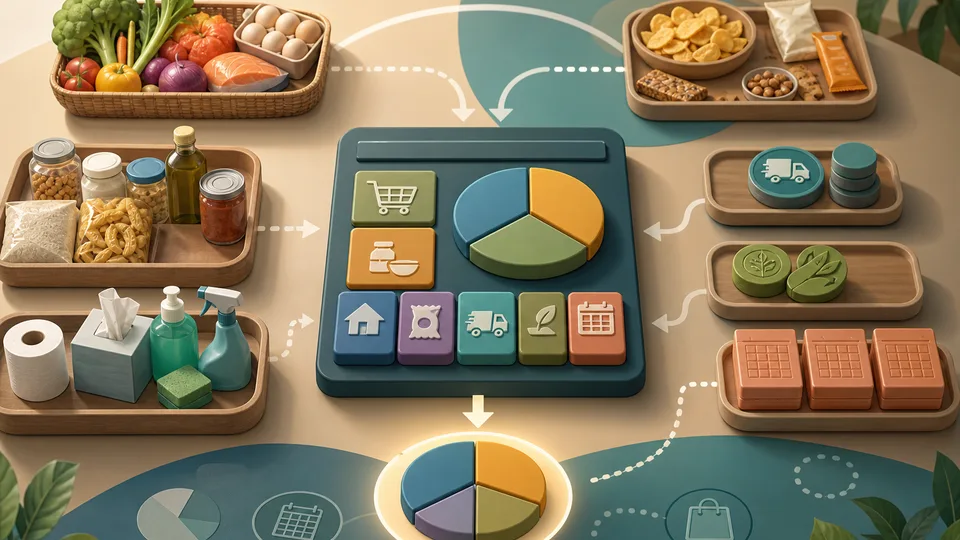
A grocery budget can expand quietly because the shop is rarely just groceries. A single basket may include dinners, lunches, pantry staples, cleaning products, toiletries, snacks, pet supplies, delivery fees, forgotten items, and impulse extras. When all of that is treated as one total, it becomes hard to know what actually changed.
A practical grocery budget separates the categories before the shop grows. Meals, staples, household items, snacks, delivery fees, waste, and shopping frequency all behave differently. Seeing those parts makes the weekly and monthly total easier to manage.
The Grocery Budget Calculator helps estimate household grocery spend from manual category assumptions. It pairs with the Meal Cost Calculator for recipe-level checks and the Full Recipe Costing Calculator when ingredient portions, yield, and waste need deeper treatment.
Start with the week, then scale to the month
Most grocery planning happens weekly, but many budgets are judged monthly. That creates a small mismatch. A weekly shop repeated four times is not the same as a calendar month, because some months contain parts of a fifth week and some households shop more often than once a week.
Start with a realistic weekly pattern, then scale it to the month deliberately. If there is a large stock-up shop once a month, keep that separate from ordinary weekly groceries so it does not make every week look unusually expensive.
Separate meals from staples
Meal groceries are the items used for planned breakfasts, lunches, dinners, and batch cooking. Staples are the items that support many meals: rice, pasta, flour, oil, spices, sauces, tea, coffee, cereal, tins, freezer basics, and long-life goods.
Mixing meals and staples can make one week look expensive because the household restocked pantry items that will last for weeks. Separating them keeps the budget fair. A stock-up week is not necessarily a failed meal plan.
Household items belong in their own line
Cleaning products, toiletries, paper goods, laundry supplies, batteries, bin bags, and other household items often appear on grocery receipts. They are real costs, but they are not food costs. If they stay hidden in the grocery total, the food budget can look worse than it is.
Create a household-item line. That one separation makes it easier to understand whether the food plan changed or the shop simply included non-food supplies.
Snacks and convenience foods need honesty
Snacks, ready meals, drinks, bakery extras, and convenience foods are not automatically bad. They simply need a visible place in the budget. If they are ignored, the budget may look sensible in theory and fail in the checkout.
Plan a snack or convenience allowance if those items are part of real life. A realistic budget beats an idealised one that is abandoned after two shops.
Delivery fees and small extras add up
Delivery fees, service charges, bags, substitutions, minimum-order extras, and small top-up trips can all change the total. They may look minor in one shop and meaningful across the month.
Keep these costs separate from the food itself. That helps decide whether a delivery habit is worth the convenience or whether a different shopping pattern would reduce the total.
Waste is a budget category too
Food waste is not only a sustainability issue. It is also a budget issue. If ingredients are bought but not eaten, the effective cost of the meals that were eaten rises.
A simple waste allowance can make the budget more honest. It can also reveal whether batch cooking, smaller shops, freezer planning, or simpler meals would help.
Plan top-up shops deliberately
Many budgets are broken by top-up shops rather than the main shop. A missing ingredient turns into snacks, drinks, extras, and another small basket. Several top-ups can equal a second grocery shop.
If top-ups are normal, include them. If the goal is to reduce them, identify why they happen. The cause may be forgotten staples, poor meal planning, unpredictable schedules, or a preference for fresh items.
Use meals to anchor the budget
A grocery budget is easier when it is tied to actual meals. Planning five dinners, lunches, breakfasts, and a few flexible options gives the shop a purpose. It also makes it easier to reuse ingredients across meals.
The aim is not to remove spontaneity. It is to stop the basket from being built entirely from memory while standing in the shop or browsing online.
Review the category that moved
When a grocery budget misses, ask which category moved. Was it household supplies, snacks, delivery fees, waste, a pantry restock, guests, a holiday week, or higher meal costs? The answer matters because each cause needs a different response.
If meal costs rose, recipe planning may help. If household items rose, a separate monthly household supply budget may help. If top-ups rose, a better list may help.
Build a list from categories
A category-based list is easier to control than a memory-based list. Start with meals, then pantry, then household supplies, then snacks and extras. This order keeps essentials visible before optional items fill the basket.
It also makes substitutions easier. If a planned dinner is too expensive this week, swap the meal rather than cutting random items at checkout. The budget remains connected to what the household will actually eat and use.
Watch the difference between price and use
A large pack can look expensive in the shop but cheap per use. A small convenience item can look affordable but expensive per serving. Grocery budgeting needs both views. Immediate cash cost matters, but so does how long the item will last.
For pantry goods, note whether the purchase supports one meal or several weeks. For fresh food, note whether it will be used before it spoils. The cheapest item is not cheap if half of it becomes waste.
Example: separating a weekly shop
Suppose a weekly shop includes planned meals, a restock of rice and oil, laundry detergent, snacks, and a delivery fee. If the whole receipt is treated as food, the meal plan looks expensive. If the categories are separated, the picture changes.
The meals may be reasonable, the pantry restock may be occasional, the household item may belong in a monthly supply budget, and the delivery fee may be a convenience choice. The same total becomes easier to understand.
Use the budget to decide, not to punish
A grocery budget should make decisions easier. It should not turn every food choice into guilt. Some weeks include guests, school holidays, celebrations, illness, travel, or schedule pressure. The budget can show what changed without pretending every week is identical.
When the total rises, look for the reason. Then decide whether it was worth it, avoidable, or simply part of life that needs a more honest monthly allowance.
Repeat the same structure for a few shops
One shop can be unusual. Three or four shops reveal the pattern. Keep the same categories for a few weeks before changing the budget too aggressively.
If the same category is high every week, it needs a real allowance. If it appears only occasionally, it may belong in a monthly or seasonal line instead of the weekly food budget.
What this should not claim
A grocery budget calculator does not fetch live supermarket prices, provide nutrition advice, track inventory, compare brands, apply coupons, or manage official cost-of-living data. It estimates from the manual categories entered.
That estimate is enough to make the next shop less vague. Before the basket expands, a category-based budget shows which parts of the household shop are driving the total.