
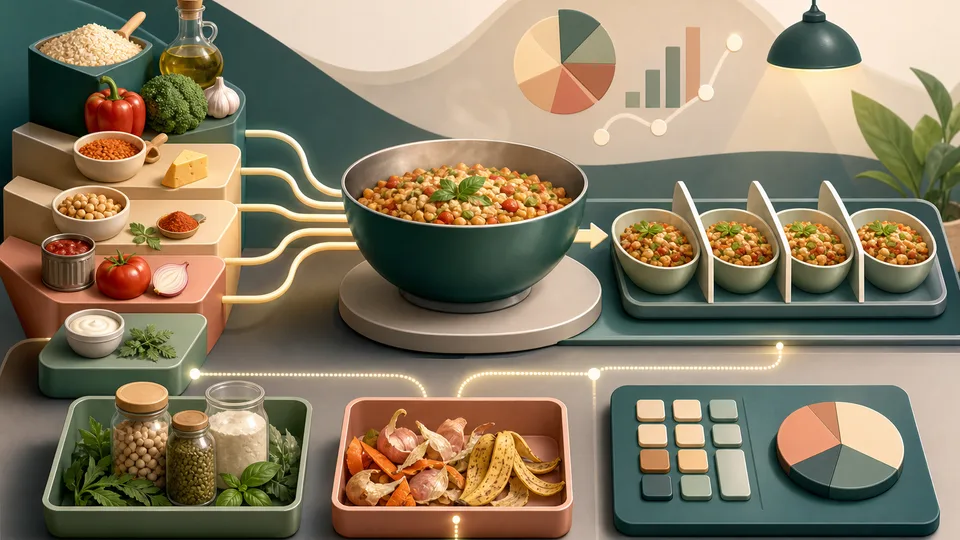
Meal cost is easy to underestimate because the grocery receipt does not map neatly to one recipe. Some ingredients are used completely, some are partly used, some come from the pantry, and some waste or leftovers appear along the way.
A useful meal estimate separates ingredient cost, batch size, servings, pantry assumptions, waste, and cost per serving. That makes the recipe easier to compare with other meals or with eating out.
The Meal Cost Calculator helps estimate recipe cost, batch cost, and cost per serving from entered ingredient costs and servings. It pairs with the Full Recipe Costing Calculator when quantity, yield, waste, and menu pricing need deeper treatment, and the Grocery Budget Calculator for broader household food spending.
Start with the recipe, not the receipt
A receipt may include snacks, household items, future meals, and ingredients used across several recipes. The meal estimate should include only the portion used for this recipe.
If a bag of rice is used across ten meals, charging the whole bag to one meal will overstate the cost. If the recipe uses the whole pack, then the full cost belongs in the batch.
Servings change the story
Batch cost is useful, but cost per serving is usually easier to compare. A meal that costs more in total may still be cheaper per serving if it makes several portions.
Define the serving size honestly. Four tiny portions and four filling portions are not the same planning result.
Pantry items still have value
It is tempting to treat pantry items as free because they are already in the kitchen. For quick household planning, that may be fine. For a more accurate recipe cost, pantry use should be counted.
At minimum, be consistent. If oil, flour, spices, and sauces are ignored in one recipe and counted in another, comparisons will be distorted.
Waste and trim can matter
Some ingredients lose weight through peeling, trimming, bones, shells, evaporation, or spoiled leftovers. For casual home cooking, this may be small. For batch cooking or menu planning, it can matter.
A basic meal calculator may not model every yield detail, but the estimate should still remind you that purchased weight and edible finished portion are not always the same.
Leftovers can improve value
A recipe that creates lunch portions, freezer meals, or reusable components may be better value than the first dinner suggests. Count the servings that will actually be eaten.
If leftovers usually go uneaten, do not let theoretical portions make the meal look cheaper than it is.
A practical meal-cost workflow
List the ingredients used in the recipe. Enter the cost or portion cost for each. Add servings. Calculate batch cost and cost per serving. Then decide whether pantry items, waste, or leftovers need adjustment.
For casual planning, a close estimate is usually enough. For selling food, catering, or menu pricing, use a fuller costing workflow.
Worked example: batch and serving cost
Suppose a pasta bake uses ingredients that add up to 18 and makes six servings. The cost per serving is 3. If two servings become leftovers for lunch, those portions still count as value if they are actually eaten.
If only four servings are eaten and the rest is wasted, the effective cost per eaten serving rises. That is why servings should be realistic rather than optimistic.
Portion cost beats package cost for comparisons
A recipe may use half a packet, one spoon of spice, or a small amount of oil. Counting the full package every time can make home cooking look more expensive than it is.
On the other hand, ignoring all pantry ingredients can make meals look artificially cheap. Choose a consistent level of detail for the decision you are making.
Batch cooking changes the calculation
Batch cooking often reduces cost per serving because ingredients are used efficiently and leftovers become planned meals. It can also create waste if the batch is too large or storage is poor.
Estimate batch size and actual servings together. A large batch is only cheaper if it becomes food people eat.
Meal prep needs storage assumptions
If meals are prepared ahead, storage containers, freezer space, reheating, and freshness matter. These may not be part of the calculator, but they affect whether the plan works.
A cheap batch that cannot be stored or reheated well may not be a useful saving.
Recipe cost is not nutrition advice
A meal can be cheap and nutritionally poor, or expensive and still not right for someone's needs. Cost per serving is one planning lens.
Keep nutrition, allergies, preferences, and health goals separate from the cost calculation unless a qualified source or specialist tool is being used.
Compare meals by the same rule
Meal-cost comparisons only work when the same assumptions are used. If pantry items are ignored for one recipe and counted for another, the comparison is not fair.
Choose a simple rule and repeat it. For casual meal planning, count the main ingredients and serving count. For tighter budgeting, include pantry portions, waste, and batch leftovers.
Shopping list timing can change cost
A recipe may be cheap when ingredients are already available and expensive when everything has to be bought at once. That does not mean either estimate is wrong. They answer different questions.
Separate immediate shopping cost from recipe portion cost. Immediate shopping cost tells you what you need to spend today. Portion cost tells you what the meal uses.
Special diets and preferences affect substitutions
Substituting ingredients can change cost quickly. Gluten-free, dairy-free, higher-protein, organic, imported, or convenience ingredients may alter the meal budget.
If substitutions are likely, cost the recipe with the ingredients that will actually be used, not the cheapest generic version.
Checklist before trusting meal cost
Before relying on the estimate, check ingredient costs, portion used, servings, pantry treatment, leftovers, waste, substitutions, storage, and whether the meal is part of a broader grocery shop.
Then decide what the number is for: a quick dinner choice, meal prep comparison, grocery budget, or deeper recipe costing. The level of detail should match the decision.
Use meal cost to plan, not to guilt
A meal-cost estimate should make planning easier, not turn every meal into a judgement. Sometimes a more expensive meal is worth it because it is convenient, enjoyable, nourishing, or shared with other people.
The number is a planning tool. It helps compare options, spot expensive recipes, and decide when batch cooking is worth the effort.
Keep a few repeat meals
Once a recipe cost is known, it can become a reference meal. A few trusted low-cost meals make grocery planning easier because not every week starts from zero.
Update the estimate when ingredient prices or serving sizes change, but do not redo the whole calculation every time if the recipe is stable.
When to use full recipe costing
If the decision involves selling food, setting menu prices, costing waste, tracking yield, adding labour, or planning margins, use a fuller recipe costing workflow. A simple meal-cost estimate is best for household planning and cost-per-serving comparisons.
Knowing when the simple model is enough keeps the calculation useful without pretending it can price an entire food business.
What this should not claim
A meal cost calculator does not fetch live grocery prices, give nutrition advice, price restaurant labour, manage inventory, track allergies, or calculate official menu margins. It estimates from entered ingredient costs and servings.
Use it to make recipe budgets visible before a meal that felt cheap turns out to be expensive per portion.