
Debt Problems Usually Build Gradually Rather Than Dramatically
I've found that debt problems are almost always less about the total amount owed and more about the monthly structure — which is where the real choices live. A lot of people imagine serious debt problems beginning with reckless spending or catastrophic decisions. Sometimes that happens. But in practice debt often builds much more quietly.
Small recurring costs accumulate. Credit balances slowly rise. Unexpected expenses appear during periods of financial pressure. Income becomes unstable. Interest compounds in the background.
By the time many people fully realise the scale of the problem, the stress has often been building for quite a while already.
I think one reason debt feels emotionally overwhelming is that the numbers stop feeling abstract once interest begins compounding faster than expected. Minimum payments can create the illusion of progress while balances barely move at all.
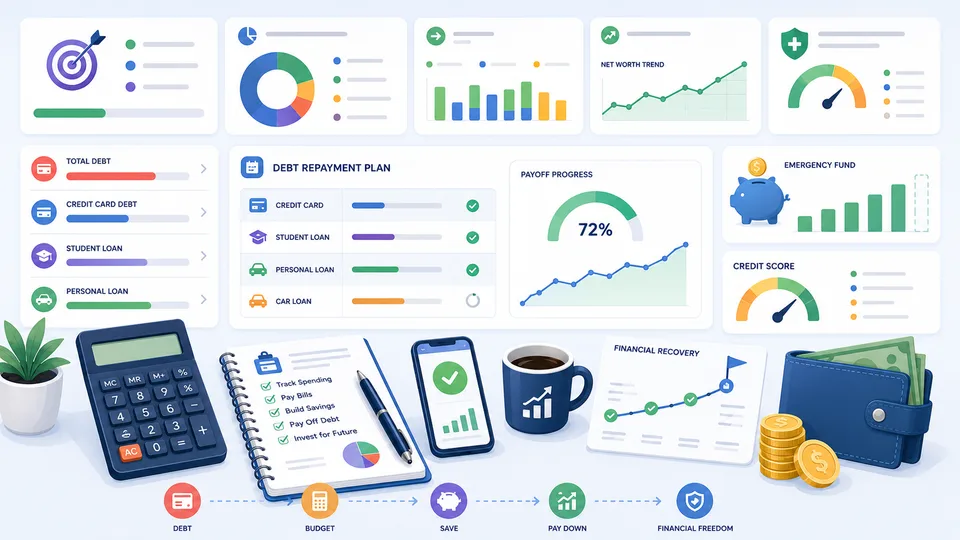
This guide brings together practical articles and calculators covering debt repayment, budgeting, emergency savings and longer-term financial recovery.
Why Interest Changes The Entire Situation
One of the biggest misconceptions around debt is underestimating how powerful interest becomes over time.
At first many balances appear manageable because monthly payments seem relatively small. But compound interest can dramatically increase the total repayment cost, especially with:
- credit cards
- high-interest personal loans
- long repayment periods
- persistent minimum payments
I remember comparing repayment examples years ago and being surprised by how much extra money disappeared purely into interest rather than reducing the original debt itself.
Related articles:
Debt Repayment Strategies Matter Psychologically As Well As Financially
Debt repayment discussions online often focus heavily on mathematical optimisation. In reality, psychology matters just as much.
Some repayment methods prioritise:
- highest interest first
- smallest balance first
- cash-flow improvement
- motivation and momentum
The mathematically perfect strategy is not always the easiest strategy to sustain emotionally over several years.
Supporting article:
Debt Snowball Vs Debt Avalanche
Budgeting Usually Feels Different During Financial Recovery
A lot of budgeting advice assumes stable income, manageable obligations and relatively low financial stress.
Debt repayment changes the emotional relationship with budgeting quite a bit.
During financial recovery, budgeting often becomes less about optimisation and more about creating stability and visibility.
I think many people initially expect budgeting to feel restrictive. In practice it often reduces anxiety because uncertainty becomes smaller once spending patterns are clearer.
Related guide:
Emergency Savings Prevent Smaller Problems Becoming Bigger Ones
One reason debt cycles become difficult to escape is that unexpected costs continue happening while people are already financially stretched.
Without emergency savings, even moderate problems can push balances higher:
- car repairs
- medical costs
- temporary income loss
- moving expenses
- household repairs
Emergency funds rarely feel exciting, but they create breathing room that prevents new debt from constantly replacing old debt.
Supporting article:
How Much Emergency Fund Do I Need?
Small Spending Habits Become More Visible Under Pressure
Financial stress tends to make everyday spending patterns more noticeable.
This does not mean people should obsess over every coffee purchase or eliminate all enjoyment from life. Internet finance advice sometimes becomes strangely extreme in that direction.
But recurring habits can matter more than expected when combined with high-interest debt and tight monthly cash flow.
Related articles:
Financial Recovery Is Usually Slower Than People Hope
A lot of financial recovery content online focuses on dramatic transformations and rapid payoff timelines.
Real-world recovery often feels slower and less visually impressive.
Progress may involve:
- gradually reducing balances
- building emergency savings
- improving budgeting habits
- reducing financial stress
- increasing income stability
I think this slower reality can feel frustrating initially because internet success stories compress years of effort into a few dramatic highlights.
But gradual progress is still real progress.
Mortgage Decisions And Debt Priorities Often Interact
People balancing debt repayment sometimes face difficult trade-offs between:
- paying off debt aggressively
- saving cash reserves
- investing
- overpaying mortgages
The “best” option depends heavily on interest rates, financial stability, risk tolerance and long-term goals.
Related article:
Should I Overpay Mortgage Or Invest?
Useful Calculators For Debt And Financial Planning
Practical calculators can help make repayment planning feel more realistic and measurable.
- Debt Payoff Calculator
- Loan Payment Calculator
- Interest Calculator
- Budget Calculator
- Emergency Fund Calculator
- Burn Rate Calculator
The most useful calculations are usually the realistic ones rather than the most optimistic repayment scenarios.
Where To Start
If debt currently feels overwhelming, the best starting point is usually clarity rather than perfection.
Understand:
- total balances
- interest rates
- minimum payments
- monthly cash flow
- high-risk spending patterns
- income stability
Once the situation becomes visible and measurable, recovery planning becomes far easier psychologically.
The articles and calculators throughout this hub are designed to help turn financial stress into clearer practical decisions rather than unrealistic promises of instant transformation.