
Most Financial Problems Start Small
I've made most of the common personal finance mistakes, and in each case the pattern was the same: a small problem allowed to continue until it became a large one. People often imagine financial problems as dramatic events: huge debt, bankruptcy, missed mortgage payments or complete financial collapse.
But most money problems begin much earlier and much smaller. Overspending slightly every month. Ignoring interest rates. Carrying credit card balances too long. Delaying savings for “later”. Underestimating lifestyle inflation after pay rises.
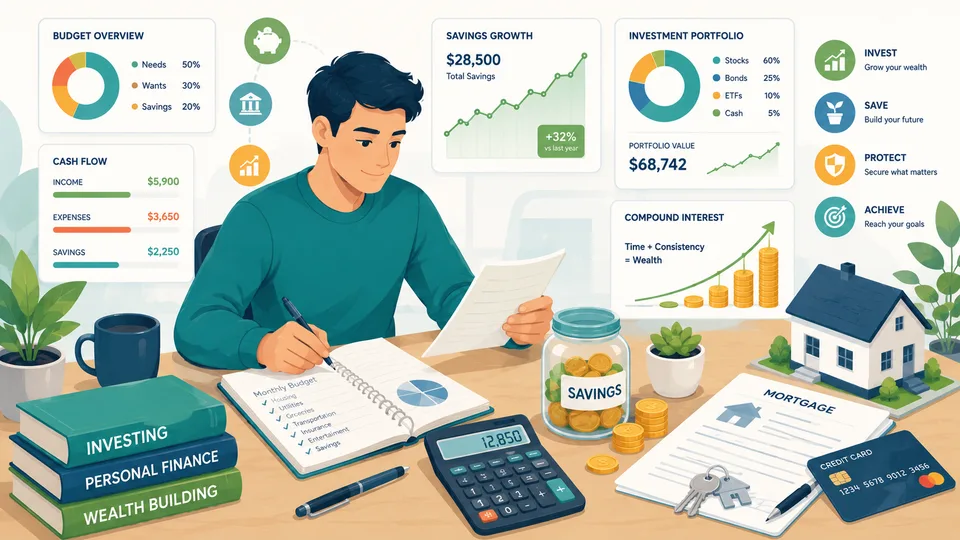
None of these decisions feel catastrophic individually. The problem is that money compounds — both positively and negatively.
This guide explains the fundamentals behind budgeting, debt, savings, investing and long-term financial planning using practical examples and calculators rather than unrealistic financial fantasy.
Budgeting Is Mostly About Awareness
A lot of people avoid budgeting because they associate it with restriction or guilt. In reality, budgeting is mostly about awareness.
Many people genuinely do not know where their money goes each month until they track it properly.
Subscriptions, impulse purchases, delivery apps, interest payments and small recurring costs can quietly absorb large amounts of income over time.
A useful budget does not necessarily mean cutting all enjoyable spending. It means understanding what is sustainable and what is slowly damaging long-term financial stability.
Debt Becomes Dangerous When Interest Starts Working Against You
Compound interest is powerful, but it works both ways.
When investing or saving, compounding helps money grow. When carrying debt, compounding increases how expensive borrowing becomes over time.
This is especially true with high-interest credit cards where minimum payments often barely reduce the original balance.
A lot of people underestimate how long debt repayment actually takes because they focus on monthly affordability rather than total repayment cost.
Loan calculators, repayment estimators and debt payoff tools can make these long-term costs far more visible.
Savings Matter More Than Most People Realise
Emergency savings are often treated as optional until life becomes unpredictable.
Unexpected expenses are not unusual events. They are normal parts of life. Cars fail. Jobs change. Rent increases. Boilers break. Medical issues appear. Income fluctuates.
Without savings, even moderate financial problems can quickly become debt problems.
One of the most important financial habits is reducing the time between earning money and saving part of it.
Waiting until “there is money left over” rarely works consistently because spending naturally expands to fill available income.
Compound Interest Rewards Time More Than Perfection
Many people delay investing because they feel they need expert knowledge, large starting balances or perfect timing.
In reality, long-term investing is often more dependent on consistency and time than brilliance.
Regular contributions over many years can outperform occasional large investments made inconsistently.
The earlier money starts compounding, the larger the long-term effect becomes. This is why waiting years to begin saving or investing can become extremely expensive later.
The “cost of waiting” is usually much larger than people expect.
Income Alone Does Not Create Financial Stability
High income can improve financial flexibility, but income alone does not automatically create wealth.
Some people with moderate incomes build strong financial security because they manage spending carefully and save consistently. Others earn large salaries while remaining financially fragile because expenses rise alongside income.
This is commonly known as lifestyle inflation.
As earnings increase, expectations often increase too: larger homes, more expensive cars, more subscriptions, more travel and higher monthly obligations.
The problem is not enjoying money. The problem is becoming financially trapped by fixed expenses that require constant high income to maintain.
Mortgages And Loans Should Be Understood Long Before Signing
Many people focus only on monthly affordability when taking loans or mortgages. But the full financial picture matters far more.
Interest rates, repayment length, overpayments and total repayment cost can dramatically change how expensive borrowing becomes.
Small interest rate differences across long repayment periods can easily translate into thousands or even tens of thousands in additional costs.
This is why mortgage calculators and loan repayment tools are useful. They make long-term financial commitments easier to visualise before decisions become difficult to reverse.
Financial Planning Is Mostly About Reducing Stress
Good financial planning is not just about becoming wealthy.
For many people, the real benefit is reducing uncertainty.
Knowing bills are covered. Having emergency savings. Understanding debt repayment timelines. Tracking retirement progress. Building predictable systems.
These things reduce financial anxiety because they create visibility and control.
Money problems often become psychologically exhausting when people avoid looking at the numbers entirely.
Useful Finance Calculators
- Compound Interest Calculator — estimate long-term investment and savings growth.
- Loan Calculator — calculate repayments, interest and borrowing costs.
- Mortgage Calculator — estimate mortgage payments and long-term repayment costs.
- Savings Calculator — project savings growth over time.
- Debt Payoff Calculator — estimate repayment timelines and interest reduction.
- Budget Calculator — track income, expenses and financial balance.
- Emergency Fund Calculator — estimate realistic emergency savings targets.
- APR Calculator — compare borrowing costs more accurately.
- Retirement Calculator — estimate long-term retirement savings needs.
- Credit Card Interest Calculator — understand repayment timelines and interest costs.
Where To Start
If your finances currently feel stressful, complicated or out of control, start simple.
Track spending honestly. Understand your debt. Build even a small emergency buffer. Learn how interest works. Reduce avoidable financial leaks.
You do not need a perfect financial system immediately.
Most long-term financial stability comes from doing basic things consistently for many years rather than chasing complicated financial hacks.
Small improvements repeated over time usually matter far more than dramatic short-term changes.