
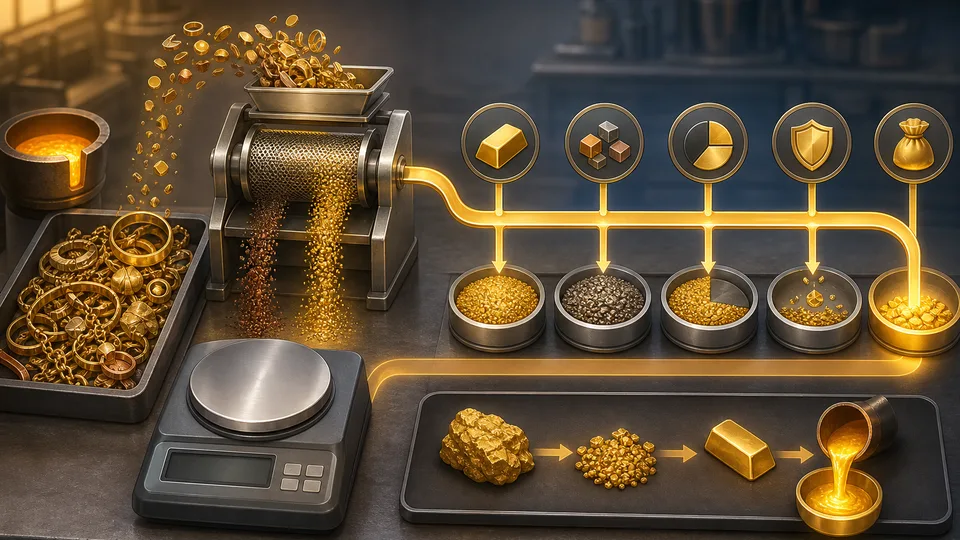
Gold purity changes melt value because jewellery and scrap gold are rarely pure gold. A heavy item can contain less gold than a smaller high-purity item if more of its weight is alloy.
The useful calculation is not authentication or appraisal. It is a transparent estimate of how gross weight, karat purity, manual price assumptions, payable percentage, and fees interact.
If you already have the inputs, use the gold purity calculator. This guide explains what to check before you enter the numbers, where the calculator is useful, and where ordinary interpretation still belongs to you.
The Short Version
Start with gross weight, convert karat or purity percentage into pure gold weight, apply a manual price per pure gram, then account for payable percentage and any fees.
The calculator is most useful when the problem has already been framed clearly. That means naming the inputs, matching units, separating estimates from known values, and avoiding claims the calculation cannot support.
What The Calculator Is Really Answering
It answers how much pure gold is represented by the stated weight and purity, then what an estimated melt-value scenario looks like after manual adjustments.
That distinction matters because a neat output can feel more certain than the assumptions behind it. A calculator can make arithmetic consistent, but it does not make a weak input strong. Treat the result as a model of the information entered, not as an outside verification of the real world.
The Inputs To Separate First
Separate gross weight, purity, price assumption, payable percentage, and fees. Do not mix jewellery condition, collector value, hallmark trust, or live market pricing into the arithmetic.
A good setup usually has two columns: values you know and values you are assuming. Known values might come from a statement, measurement, invoice, quote, or formula. Assumptions might be growth rates, future behaviour, manual rates, or simplifying conditions. Keeping those categories visible makes the result easier to review later.
Units, Timing, And Definitions
Weight units must match the price unit. If price is per gram, convert ounces or pennyweights to grams before multiplying. Purity must be a fraction or percentage of pure gold.
Definitions matter as much as units. Two people can use the same phrase while meaning different things. Decide what counts before calculating, especially when a value can include or exclude fees, overhead, taxes, time, reserves, rounding, or optional items.
A Worked Way To Think About It
Imagine two items with the same gross weight but different karat values. The higher-purity item produces more pure gold weight. The calculator makes that difference visible before any payable percentage or fee is applied.
Then separate the estimate into stages: gross weight, pure gold weight, gross melt value, payable value, and net after fees. Each stage answers a different question.
This kind of staged setup is slower than throwing numbers into a form, but it prevents the most expensive mistakes. It also makes the answer explainable. If the result surprises you, you can trace it back through the input sequence instead of guessing which part went wrong.
Where This Connects To Other Calculators
This calculation sits beside broader investment or weight-conversion work rather than replacing it. For adjacent checks, gold investment calculator, weight converter calculator may also be useful.
Use the calculator chain deliberately. One tool should answer one part of the question. When several calculators are involved, write down which output becomes the next input so a rounded or mismatched value does not quietly move through the whole workflow.
Common Mistakes
The first mistake is valuing gross item weight as if it were pure gold weight. The second is using a live-looking price without recording where it came from.
The third mistake is treating the estimate as an appraisal. Condition, authenticity, collectability, and dealer terms are outside the melt-value arithmetic.
Another common mistake is treating a comparison result as a recommendation. Many of these calculators compare scenarios, but scenario comparison is not the same as personal advice, professional sign-off, or a guarantee about future conditions.
Scenario Checks Before You Trust The Output
Before treating the output as useful, run at least one sense-check scenario. Keep most inputs the same and change only the assumption you are least confident about. If the result moves dramatically, the calculation is sensitive to that assumption and should be explained with care.
It also helps to run a conservative case, a middle case, and a more optimistic case. The purpose is not to predict the future perfectly. The purpose is to see whether the conclusion depends on a narrow set of inputs or whether it remains broadly similar across reasonable assumptions.
For What Gold Purity Means for Melt Value, this is especially important because the calculator is simplifying a real situation into a smaller set of variables. The cleanest result is not always the most realistic result. A good scenario check keeps the arithmetic useful without pretending the model knows more than it does.
How To Document The Assumptions
Write down where each major input came from. If it is measured, note the measurement basis. If it is estimated, note the source or reason. If it is a policy, quote, rate, formula, or manual assumption, record the date and context. That small note makes the result much easier to revisit later.
Assumption notes are useful even when you are only calculating for yourself. They explain why the result looked sensible at the time. If a number changes later, you can update the relevant input instead of rebuilding the whole calculation from memory.
The final output should be read together with those notes. A calculator answer without assumptions is just a number. A calculator answer with assumptions becomes a decision aid, because someone else can inspect the path from inputs to result.
Limits And Judgment Calls
This is not a live price feed, authentication tool, tax guide, or selling recommendation. It is a manual calculator for understanding purity math.
When the context is financial, business, technical, or scientific, the calculation can be precise while the decision remains uncertain. That is normal. The value of the calculator is that it makes the moving parts explicit enough to discuss, revise, or challenge.
A Reliable Workflow
Record gross weight, choose the purity basis, convert to pure gold weight, apply your manual price assumption, then adjust for payable percentage and fees before interpreting the net figure.
The best calculator workflow is not just input, output, done. It is define, calculate, inspect, and revise. Define the problem, calculate from consistent inputs, inspect whether the result makes sense, then revise the inputs if the model does not match the real situation.
FAQ
Can I use the result as a final decision?
Use it as structured evidence, not a final decision by itself. The result is only as good as the assumptions and context behind the inputs.
What should I check first if the result looks wrong?
Check units, timing, signs, included cost categories, and whether the input belongs to the same scenario as the output you are trying to calculate.
When should I use a simpler calculator instead?
If the question only asks for one narrow relationship, use the simpler tool. Use this calculator when the extra variables genuinely affect the answer.