
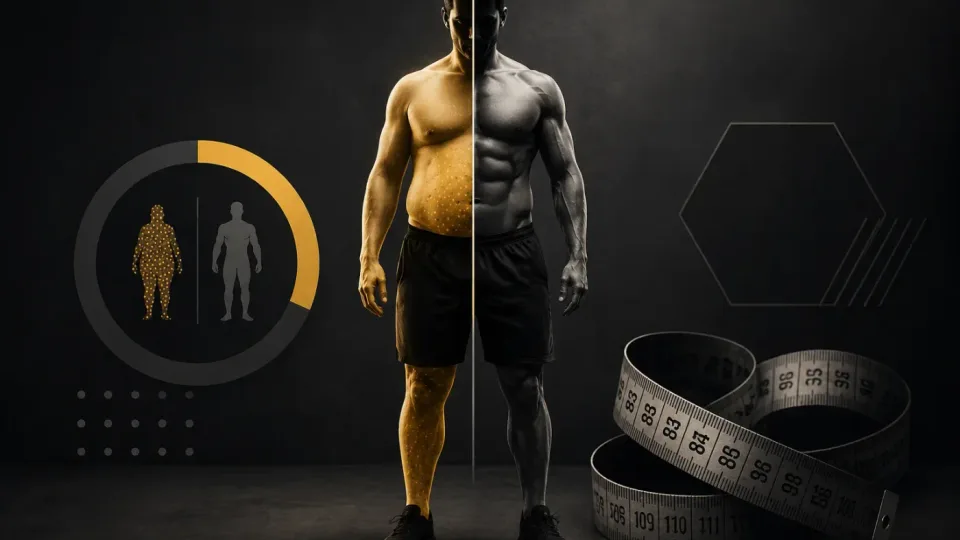
My understanding of body fat percentage improved once I stopped treating it as a single fixed number and started understanding what different methods actually measure.
What Is Body Fat Percentage?
Body fat percentage is the proportion of your body that is made up of fat compared to everything else, such as muscle, bone, and water.
It gives a clearer picture of your health and fitness than body weight alone.
Why Body Fat Percentage Matters
Two people can weigh the same but have very different body compositions.
- One may have more muscle
- The other may have more fat
Body fat percentage helps you understand this difference.
Healthy Body Fat Ranges
Typical healthy ranges vary by gender:
Men
- Essential fat: 2–5%
- Athletes: 6–13%
- Fit: 14–17%
- Average: 18–24%
- Obese: 25%+
Women
- Essential fat: 10–13%
- Athletes: 14–20%
- Fit: 21–24%
- Average: 25–31%
- Obese: 32%+
Women naturally have higher body fat levels due to biological differences.
How to Calculate Body Fat Percentage
There are several ways to estimate body fat:
- Skinfold measurements
- Bioelectrical impedance scales
- DEXA scans (most accurate, but expensive)
- Body measurements using formulas
A common method uses measurements like waist, neck, height, and sometimes hips.
Example Calculation
A simple estimate might use body measurements:
For example:
- Height: 175 cm
- Waist: 85 cm
- Neck: 40 cm
Using a formula, this might give a body fat estimate of around 18–20%.
This would fall in the “fit” to “average” range for men.
Body Fat vs BMI
BMI (Body Mass Index) is based only on height and weight.
Body fat percentage is more accurate because it considers body composition.
- BMI can misclassify muscular people
- Body fat gives a clearer picture of health
Common Mistakes to Avoid
Relying on One Measurement
Body fat estimates can vary depending on the method used.
Comparing to Unrealistic Standards
Very low body fat levels are not necessary for good health.
Ignoring Trends
Tracking changes over time is more useful than a single number.
Use the Body Fat Calculator
To estimate your body fat percentage quickly, use the Body Fat Calculator.
You can also check general weight status using the BMI Calculator and estimate your target range with the Ideal Weight Calculator.
Frequently Asked Questions
What is body fat percentage?
It is the percentage of your total body weight that is fat.
Is body fat more important than weight?
Yes. It gives a more accurate picture of health and fitness.
How often should I measure body fat?
Every few weeks is enough to track trends.
What is a healthy body fat percentage?
This depends on gender and fitness level, but general ranges are provided above.
Can body fat percentage be reduced?
Yes, through a combination of diet, exercise, and consistency.
Conclusion
Body fat percentage is one of the most useful ways to understand your body composition. It gives more insight than weight alone and helps guide fitness and health decisions.
Use the Body Fat Calculator to get a quick estimate and track your progress over time.
What Body Fat Percentage Actually Measures
Body fat percentage is the proportion of your total body mass that consists of fat tissue, expressed as a percentage. The remainder is lean mass — muscle, bone, organs, and water. A person who weighs 80kg with 20% body fat has 16kg of fat mass and 64kg of lean mass. This is more informative than weight alone because two people with the same weight but very different body compositions have different health profiles and different responses to diet and exercise. Someone with 80kg and 15% body fat looks and performs very differently from someone with 80kg and 35% body fat, even though they're identical on the scale. The measurement is useful for tracking changes in body composition during a cutting or bulking phase, where weight might stay stable while the ratio of fat to muscle shifts.
Methods of Measurement and Their Accuracy
The method used to measure body fat percentage determines how accurate and reliable the figure is. DEXA (Dual-Energy X-ray Absorptiometry) scanning is the gold standard — it measures bone density, fat, and lean mass separately with high accuracy (within 1–2%). Hydrostatic weighing (underwater weighing) is highly accurate but requires specialist equipment. Skinfold calipers in experienced hands give reasonable accuracy (3–5% error) and are commonly used in gym settings. Bioelectrical impedance analysis (BIA) — used in smart scales and handheld devices — is convenient but less accurate (can vary by 3–8% depending on hydration levels, time of day, and recent food intake). The important thing when tracking change over time is to use the same method consistently, since absolute accuracy matters less than the reliability of the comparison.
Healthy Ranges and What the Numbers Mean
Healthy body fat ranges differ by sex because women carry essential fat in additional areas (breasts, around reproductive organs) that men don't. For women, essential fat is around 10–13%, athletic range is 14–20%, fit is 21–24%, acceptable is 25–31%, and above 32% is generally considered obese. For men, essential fat is 2–5%, athletic is 6–13%, fit is 14–17%, acceptable is 18–24%, and above 25% is generally considered obese. These ranges are guidelines, not sharp thresholds — the same body fat percentage can indicate different health risks depending on where the fat is distributed (visceral fat around organs carries higher health risk than subcutaneous fat under the skin), genetics, age, and overall health context. Age also affects appropriate ranges: body fat naturally increases somewhat with age even in healthy individuals.
Body Fat vs BMI: Which Is More Useful
BMI (Body Mass Index) measures weight relative to height and is easy to calculate but doesn't distinguish fat from muscle. A muscular person with low body fat can have a "overweight" BMI, while someone with a "normal" BMI can have high body fat if they have low muscle mass — a condition sometimes called "skinny fat" or normal-weight obesity. Body fat percentage is more accurate for assessing health risk and tracking fitness progress, but it's harder to measure reliably without proper equipment. In practice, the two measures complement each other: a person with a high BMI and high body fat has a clearer health signal than BMI alone, while someone with high BMI but low body fat can be reassured the BMI is reflecting muscle rather than excess fat. Using both together gives more useful information than either alone.