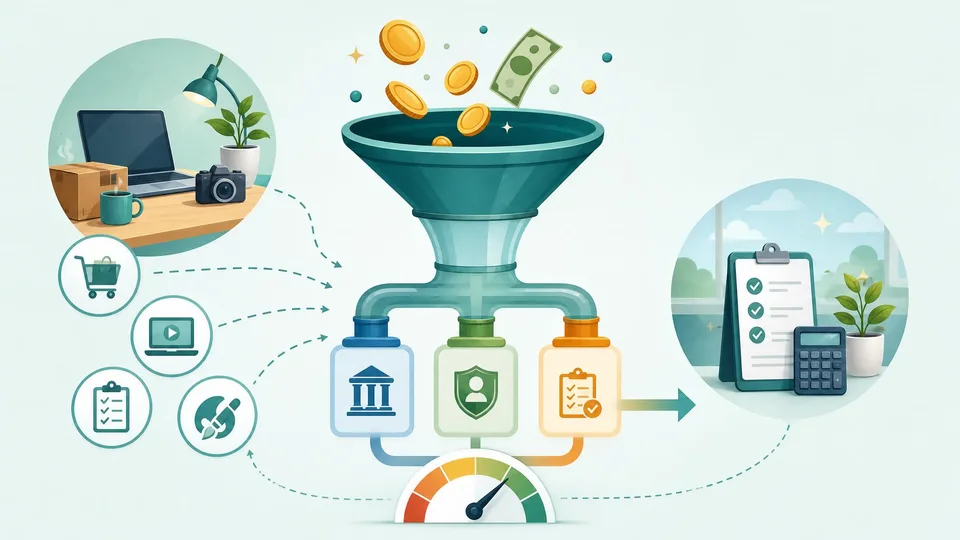
My first experience with side income tax was finding out that money I thought I had earned was actually partly owed to HMRC — which arrived as an unwelcome surprise.
Tax on Side Hustles and Second Income Explained
Side hustles have become incredibly common in the UK.
Some people freelance on weekends.
Others sell products online, create digital content, drive for delivery apps or take on evening consulting work alongside a full-time job.
At first, the extra money often feels simple and exciting.
Then eventually somebody asks:
"Are you declaring that to HMRC?"
That is usually the moment people realise side income may involve more complexity than expected.
I have seen this happen repeatedly. Somebody starts earning a few hundred pounds casually, assumes it is informal pocket money, then gradually realises the tax side becomes more important as income grows.
The good news is that side-hustle taxation is usually far less mysterious once you understand the basic principles.
Side Income Is Still Usually Taxable
One of the biggest misconceptions is that second income somehow sits outside normal taxation rules.
In most cases, it does not.
If you earn additional income through:
- freelancing
- consulting
- online selling
- content creation
- gig work
- contracting
- second jobs
then tax obligations may eventually apply depending on the scale and nature of the activity.
The confusion usually comes from the fact that side hustles often begin casually before becoming financially meaningful later.
Second Jobs Often Create Payroll Confusion
Many workers become confused when starting a second PAYE job.
This happens because personal allowances are normally applied to a main job first.
The second employer may therefore apply:
- different tax codes
- higher withholding rates
- alternative PAYE calculations
Suddenly the second payslip can look surprisingly heavily taxed.
I have known people who assumed their second job was barely worth doing because the first payroll deductions looked so aggressive.
Often the issue was simply how allowances had been allocated.
If payroll coding still feels confusing, you may also want to read Emergency Tax Codes Explained in Plain English.
Freelance Side Income Usually Works Differently
Freelance side income often creates different responsibilities compared with second PAYE jobs.
Depending on circumstances, people may eventually need to:
- register for self-assessment
- track income and expenses
- report profits
- pay income tax separately
- pay National Insurance contributions
This catches many side-hustle workers off guard because the money initially arrives without automatic PAYE deductions.
Psychologically, it feels like fully usable income.
But part of it may already belong to future tax obligations.
Why Side Hustles Feel Financially Different
Traditional employment hides much of the tax process because deductions happen automatically before salary reaches your bank account.
Side income often works in reverse.
The money arrives first.
The tax obligations appear later.
This creates a dangerous illusion of having more disposable income than you actually do.
I once knew somebody earning surprisingly good weekend freelance money who upgraded their lifestyle quickly, only to become stressed months later when the actual tax calculations arrived.
The income had been real.
So had the future obligations attached to it.
National Insurance Still Matters
Many people mentally focus only on income tax.
But side income can also affect:
- National Insurance contributions
- student loan repayments
- benefit eligibility
- child benefit exposure
Once several systems interact together, take-home income can feel much smaller than expected.
This is especially common when side income begins growing rapidly.
Good Months Can Create False Confidence
One of the most dangerous periods financially is often the first genuinely successful phase of a side hustle.
Income starts arriving consistently.
Confidence rises.
People begin mentally upgrading their lifestyle around the new earnings.
But many forget that:
- future tax bills
- National Insurance
- possible payments on account
may still be approaching underneath the surface.
This delayed-pressure cycle is incredibly common among freelancers and small side businesses.
Separating Money Reduces Stress
One of the smartest habits side-hustle workers can build is separating future tax money immediately.
Many freelancers move a percentage of every payment into a separate savings account reserved for future obligations.
This creates much clearer boundaries between:
- real disposable income
- future tax liabilities
I have spoken to contractors who said this single habit dramatically reduced financial anxiety because the account balance finally reflected what they could safely spend.
Estimating Real Take-Home Income
The safest mindset is usually:
"How much of this money will realistically remain after deductions?"
rather than:
"How much entered my account?"
These calculators can help estimate future obligations more realistically:
Even rough forecasting is usually much safer than ignoring future liabilities completely.
Most Side-Hustle Stress Comes From Uncertainty
Interestingly, the biggest problem is rarely the existence of tax itself.
The real stress usually comes from uncertainty.
People worry because they do not know:
- what needs declaring
- how much to save
- whether deductions are correct
- how future liabilities will work
Once the process becomes familiar, most side hustles feel far less intimidating financially.
The Real Goal Is Predictability
Side income becomes much easier to manage once workers stop treating all incoming money as immediately spendable.
The people who seem calmest financially are often not the highest earners.
They are usually the people who became disciplined about:
- tracking income properly
- estimating deductions realistically
- separating future tax money
- planning conservatively during strong months
Most side-hustle tax problems happen because future obligations were mentally spent before they officially arrived.