
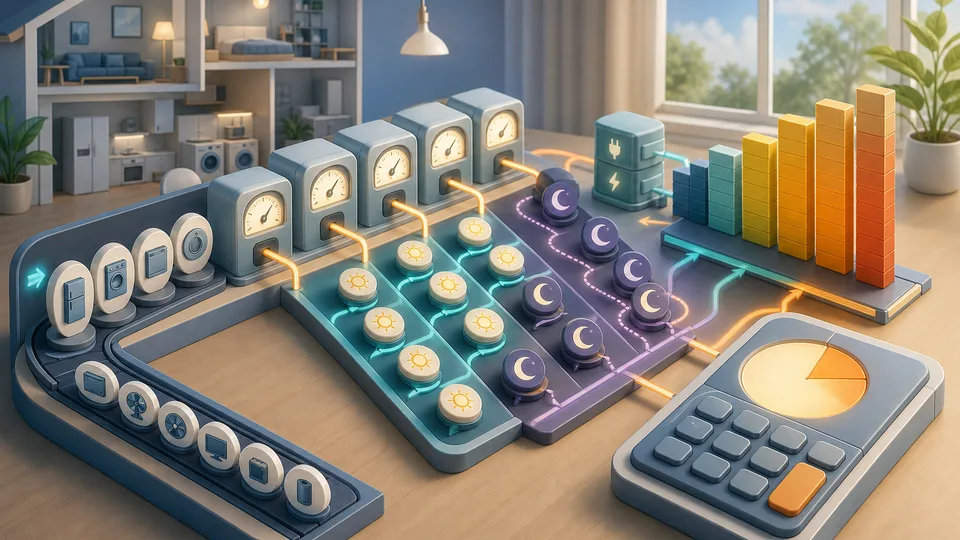
A household electricity bill often feels like one number arriving after the fact. The difficult part is that the number is built from many small behaviours: a heater left on longer than expected, a dryer cycle repeated through the week, a fridge running constantly, a computer setup that never fully sleeps, or standby loads that sit quietly in the background.
An appliance energy audit makes those pieces visible before the bill arrives. It does not need live utility data or a smart meter feed to be useful. A simple manual estimate can separate watts, hours used, days used, electricity rate, standby power, and monthly ranking so the biggest loads are easier to see.
The Appliance Energy Audit Calculator is built for that kind of practical check. It works well beside the Electricity Cost Calculator when you want a single device estimate, and the EV Charging Cost Calculator when household electricity planning includes a car.
Start with the devices that can move the bill
Not every appliance deserves the same attention. A small lamp used occasionally may barely matter. Heating, cooling, water heating, tumble drying, cooking, refrigeration, gaming equipment, pumps, dehumidifiers, and long-running computers can matter much more because they use meaningful power or run for long periods.
Start by listing the appliances that are either high wattage, used often, or left on continuously. The aim is not to catalogue every charger in the house on the first pass. The aim is to find the handful of loads that could explain a bill surprise.
Watts describe intensity
Watts tell you how much power a device draws while operating. A 2,000 watt heater is a very different load from a 20 watt router. But wattage alone is not the bill. A high-watt appliance used for a few minutes may cost less than a low-watt appliance running all month.
Use the rating label, manual, plug-in meter, or a reasonable estimate. For devices with several modes, record the mode that matches real use. A computer at idle, a computer under load, and a computer asleep can be three different estimates.
Hours turn power into energy
Electricity bills usually charge for kilowatt-hours. That means the running time matters as much as the power draw. A device that uses one kilowatt for one hour uses one kilowatt-hour. A smaller device can reach the same energy use by running longer.
For each appliance, estimate hours per day and days per month. Be honest about habits. A dryer used twice on Sunday may be better entered as cycles per week translated into monthly use. A heater used during cold evenings may need a seasonal estimate rather than an annual average.
Standby load is quiet but persistent
Standby power is easy to dismiss because each device may be small. The pattern changes when several devices draw power every hour of every day. Routers, set-top boxes, game consoles, speakers, printers, chargers, monitors, and smart devices can all contribute if they remain powered.
Standby estimates should not create panic. Many standby loads are modest and some devices need to remain on. The point is to identify persistent loads that are optional, duplicated, or higher than expected.
The electricity rate is an assumption
The rate used in a manual appliance audit should be the rate you want to test. That might be a simple average rate, a current home rate, or a scenario rate. The calculator does not fetch live tariffs, supplier pages, time-of-use schedules, or official prices.
This is a strength for planning because you can compare scenarios. If a rate changes, rerun the estimate. If an appliance is mostly used at a cheaper or more expensive time, use a rate that matches that situation.
Monthly ranking is where the audit becomes useful
The most useful output is often a ranked list. Instead of asking whether every appliance costs too much, the ranking shows which loads deserve attention first. A surprising device near the top is a better investigation target than a familiar device near the bottom.
Ranking also keeps savings realistic. If a device costs very little each month, replacing it or changing behaviour may not be worth the effort. If a device is clearly one of the largest loads, the next step may be scheduling, replacement, maintenance, insulation, or usage changes.
Separate behaviour from equipment
An audit can reveal two different problems. One is equipment: an appliance is inefficient, faulty, oversized, old, or poorly configured. The other is behaviour: the appliance is fine but used more often than expected.
Those need different responses. A high dryer cost might point to fewer cycles, better spin drying, outdoor drying when practical, or a newer appliance. A high heater cost might point to usage hours, thermostat setting, room insulation, or a different heating strategy. The calculator gives direction; it does not decide the fix.
Use seasons deliberately
Some appliances are seasonal. Fans, heaters, dehumidifiers, air conditioners, pool pumps, garden equipment, and holiday lighting may distort an annual average if they are entered as if they run all year.
Make separate estimates for summer, winter, and typical months when needed. A seasonal audit is usually more practical than trying to force every device into one universal month.
Check the assumptions before blaming the bill
If an estimate looks dramatic, check the inputs. A common mistake is mixing watts and kilowatts, or entering daily hours as monthly hours. Another is using the full rated wattage for a device that cycles on and off rather than drawing that power continuously.
Fridges, freezers, heaters, ovens, and compressors may not run at full draw every minute. For those devices, a measured plug-in reading or manufacturer energy figure can improve the estimate.
When a simple audit is enough
A manual appliance audit is useful when you need a planning estimate, a quick household comparison, or a way to decide what to investigate next. It is not a replacement for a smart meter, professional energy assessment, official tariff comparison, or electrical safety inspection.
Use the audit to create a shortlist. Then decide whether the next action is measurement, behaviour change, maintenance, replacement, or simply accepting the cost because the appliance is doing necessary work.
A practical workflow
List the likely high-impact appliances. Enter watts, usage hours, usage days, standby power where relevant, and the electricity rate. Sort by monthly cost. Check the top few results for input mistakes. Then pick one or two changes that are realistic enough to repeat.
The best household energy plan is rarely a perfect spreadsheet. It is a clear view of the biggest loads and a small set of changes that can actually survive normal life.
Use measurement when the estimate matters
For most household planning, an estimate is enough to decide what deserves attention. When a result looks surprising or the appliance is expensive to run, measurement can help. A plug-in energy meter, manufacturer energy label, or smart plug reading can replace guesswork with a more reliable figure.
Measure over a period that represents normal use. A fridge checked for one hour may not show a full cycle pattern. A computer measured during a quiet evening may not show gaming, rendering, or work loads. Better inputs make the same calculator more useful.
Turn the result into one action
An audit is most useful when it leads to a manageable action. That might be changing a timer, turning off a redundant device, adjusting a schedule, measuring one suspicious appliance, or comparing replacement cost with monthly running cost.
Trying to fix every appliance at once usually creates noise. Pick the largest avoidable load first, make one change, and then rerun the estimate after the habit or setup changes.
What this should not claim
An appliance audit calculator does not read your meter, fetch live tariffs, diagnose faulty wiring, apply official rebates, or guarantee a bill reduction. It estimates from the numbers entered.
That is still valuable. A bill surprise is harder to manage after it arrives. A simple audit gives the household a chance to see the likely causes while there is still time to adjust them.