
Most Renovation Projects Become Bigger Than People Expect
I've seen renovation projects go well and watched others become expensive, stressful experiences — and the difference is almost always preparation and material planning. A lot of home renovation projects begin with fairly simple intentions.
Replace the flooring. Build a shed base. Repaint a room. Renovate the bathroom. At first the work often sounds straightforward and manageable.
Then the practical details appear.
Measurements need checking properly. Material quantities become harder to estimate. Waste allowance matters more than expected. Hidden damage gets discovered. Labour costs rise. Timelines slip.
I think one reason renovation work becomes stressful for many people is that online content often compresses complicated projects into short satisfying before-and-after moments. Real projects usually involve much more planning, adjustment and compromise.
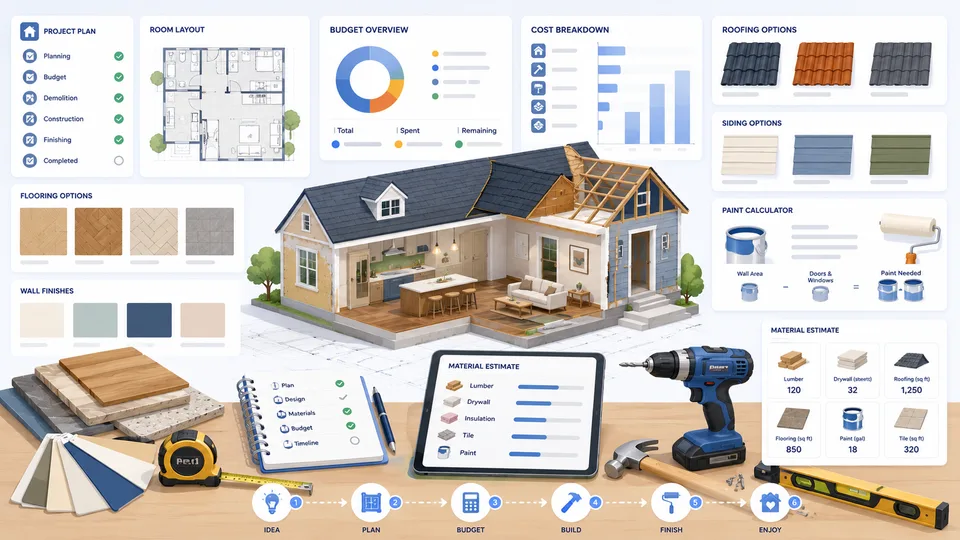
This guide connects practical articles and calculators covering renovation costs, DIY planning, measurements and building material estimation in a more realistic and grounded way.
Measurements Usually Matter More Than People Realise
A surprising number of renovation mistakes begin with incorrect measurements rather than poor workmanship.
Small errors compound quickly once ordering materials:
- flooring
- tiles
- roofing materials
- paint
- concrete
- fencing
One thing that surprised me while comparing renovation quotes was how much extra cost came from over-ordering or correcting inaccurate estimates later.
Supporting articles:
- Square Footage Calculator: Avoid Measurement Errors
- How To Calculate Building Materials
- Fence Length Planning Without Guesswork
Renovation Costs Usually Expand Around The Edges
Many people budget primarily for visible headline items:
- new flooring
- kitchen units
- bathroom fittings
- paint
- tiles
But real renovation budgets often grow through secondary costs:
- delivery fees
- surface preparation
- waste removal
- replacement materials
- unexpected repairs
- tool purchases
- extra labour time
This is why renovation projects that initially feel affordable can become financially uncomfortable midway through completion.
Related articles:
- Renovation Cost Estimator: What Most People Miss
- Bathroom Renovation Cost Guide
- Kitchen Renovation Cost Guide
Concrete Work Looks Easy Until You Start Calculating Volumes
Concrete projects often appear deceptively simple online.
In reality, getting concrete quantities wrong can create frustrating problems:
- running short during pours
- ordering excessive material
- inconsistent mixes
- structural weakness
- wasted cost
Even relatively small DIY jobs like shed bases or paths benefit from careful planning beforehand.
Supporting articles:
Flooring Decisions Are Usually About More Than Appearance
Flooring discussions online often focus heavily on style and aesthetics. In practice the long-term experience matters just as much.
Different flooring types vary significantly in:
- durability
- maintenance
- installation cost
- comfort
- water resistance
- replacement difficulty
I remember comparing flooring options years ago and realising that the cheapest material upfront did not necessarily create the lowest long-term cost once wear and replacement were considered.
Supporting articles:
Paint And Roofing Projects Often Produce More Waste Than Expected
Paint and roofing work both involve surprisingly large amounts of estimation error if calculations are rushed.
People frequently underestimate:
- surface irregularities
- multiple coating requirements
- material overlap
- cutting waste
- weather impact
This is one reason experienced contractors often include material buffers that initially look excessive to homeowners.
Supporting articles:
DIY Projects Usually Trade Money For Time And Complexity
A lot of people approach DIY primarily through the lens of saving money. Sometimes that works extremely well.
But DIY also introduces:
- learning curves
- tool costs
- mistake risk
- time investment
- physical effort
- project management pressure
I think many renovation projects become frustrating because people underestimate the mental overhead rather than the physical work itself.
That does not mean DIY is a bad idea. It simply means realistic planning matters more than internet highlight reels sometimes suggest.
Useful Calculators For Renovation And DIY Planning
Practical calculators can help turn rough renovation ideas into more realistic project estimates.
- Renovation Cost Calculator
- Concrete Calculator
- Paint Calculator
- Flooring Calculator
- Tile Calculator
- Roofing Calculator
- Square Footage Calculator
The most useful estimates are usually the realistic ones that include waste, preparation and unexpected costs rather than ideal-case assumptions.
Where To Start
If you are planning a renovation or DIY project, begin with measurements and budgeting before materials or aesthetics.
Understand:
- dimensions
- material quantities
- waste allowance
- tool requirements
- labour complexity
- realistic total costs
Once those basics are clear, project decisions become far easier and far less stressful.
The supporting articles and calculators throughout this hub are designed to help make renovation planning feel more manageable and realistic rather than overwhelming.