
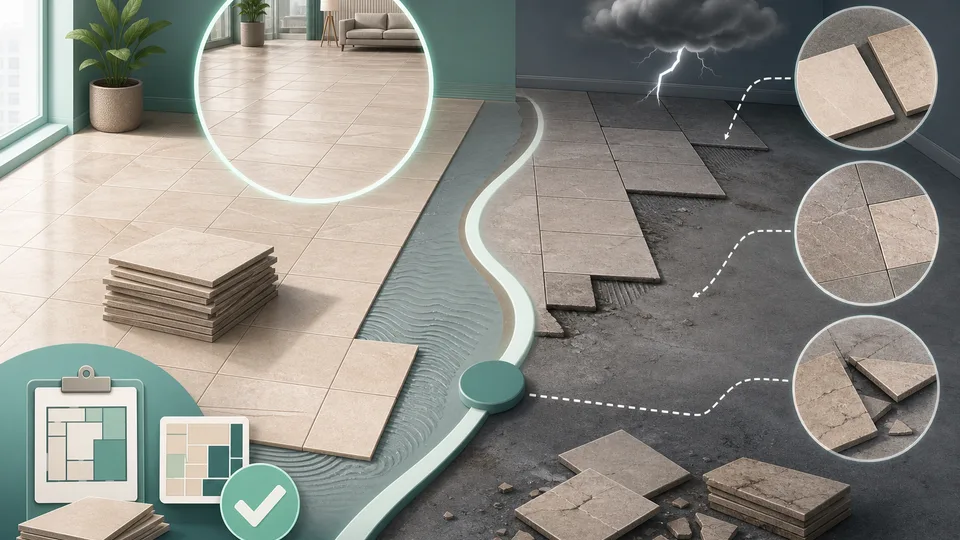
I once tiled a bathroom and ordered what I calculated to be exactly enough tiles plus 10% waste. I ran out with about a quarter of one wall left to go. The shortfall came from a combination of a miscalculated area, two more cuts than expected around a recessed shelf, and one tile that cracked during cutting. When I went back to order more, the box shade code had changed — the new tiles were technically the same product but visibly different in certain light. That experience made me permanently conservative about tile quantities. Overordering by a meaningful margin and returning what you don't use is always cheaper than matching a discontinued batch.
Nothing quite derails a tiling project like discovering mid-floor that you're short on tiles. The replacement order arrives from a different production batch. The colour is subtly off. And now your bathroom floor is a permanent reminder of the calculation error. Tile maths is simple — here's how to do it right.
The Core Calculation
Tiles needed = Area (m²) ÷ Area per tile (m²), plus waste allowance. Example: a 600×600mm tile = 0.36 m². For a 6 m² floor: 6 ÷ 0.36 = 16.7 → round up to 17 before waste. Our tile calculator applies waste automatically. Use our square footage calculator for irregular rooms first.
Waste Allowances by Layout
- Straight grid: +10%
- Brick/offset pattern: +10-15%
- Diagonal (45°): +15-20%
- Herringbone: +15-20%
- Complex L-shaped room: +20%
Planning Your Layout
Centre the layout so cut tiles at opposite edges are equal in size — no cut piece smaller than half a tile. Dry-lay your first row without adhesive before fixing anything. Takes 20 minutes. Prevents hours of rework.
Consumables to Budget For
- Tile adhesive: 2-4 kg/m² depending on tile size
- Grout: 0.5-3 kg/m² depending on joint width
- Grout joint width: 2mm rectified tiles | 3-5mm standard | 10mm+ natural stone
The Batch Number Rule — Critical
Tiles are made in batches. Colour varies between batches — sometimes obviously, sometimes subtly. Always order all tiles at once from the same batch. Check every box for the same batch number when the delivery arrives. If boxes differ, contact the supplier before opening them. Re-ordering from a different batch is the single most common expensive tiling mistake.
Further reading: The Tile Association provides installation standards for professional and domestic tiling. Visit the Tile Association for installation guidance.
What to Do When the Room Is Not a Rectangle
Most tiling guides give you the formula for a rectangular floor or wall. Real rooms are rarely that obliging. L-shapes, alcoves, bay windows, and irregular recesses all require the same principle applied in sections: split the room into rectangles, calculate each section separately, add the totals, then apply your waste percentage to the combined figure. Do not apply waste to each section individually and then add — the waste percentages overlap, so you will over-order. For rooms with significant cut sections — a narrow strip along one wall, an alcove that requires tiles cut to width — increase the waste allowance by 5% beyond the standard recommendation for your chosen pattern. Cut tiles generate offcuts that rarely suit the next cut needed.
Adhesive, Grout, and Trim: The Budget Lines Everyone Underestimates
The tile price per square metre gets all the attention in a tiling budget. The consumables are consistently underestimated. Tile adhesive coverage varies significantly by product and tile size: large-format tiles (600×600mm and above) require more adhesive applied with a larger notched trowel, and coverage rates of 2 kg/m² are common. A 20 kg bag of adhesive covering 10 m² sounds generous until you realise the bathroom walls and floor combined add up to 18 m². Grout consumption depends on joint width: narrow rectified joints use around 0.5 kg/m², but wider natural stone joints can require 3 kg/m² or more. Always buy one extra bag of each consumable. Returning a bag is easy; making a special trip mid-job because grout ran short is not.
Trim and finishing profiles — the metal or plastic L-shaped strips used at exposed tile edges, step nosings, and transitions between floor surfaces — are priced per linear metre and easily missed until installation day. Walk the perimeter of your tiling area and measure every exposed edge that will need a trim piece. Add 10% for mitre cuts and wastage. Skipping trim looks amateurish and leaves exposed tile edges vulnerable to chipping over time.
Ordering From One Batch — and What to Do If You Cannot
The batch number rule mentioned earlier cannot be overstated. Tiles are fired in kiln batches, and colour consistency exists only within a batch. If your supplier cannot fulfil the complete order from a single batch — which happens with discontinued lines, end-of-season stock, and imported tiles — request that they supply from the two closest batch numbers available, and tile the least visible area with the second batch. That might mean tiling the inside of a wardrobe or behind a toilet with the slightly different batch, keeping the main visual field consistent. Check every box for the batch number before signing for delivery. Suppliers vary on their return policy for opened boxes — but unopened boxes from the wrong batch can often be exchanged before they are used.
How to Check Your Measurement Before the Tiles Are Ordered
Measure twice. Measure a third time if the order is large. Then check your figure by counting: for a floor where you know the tile size, estimate how many tiles fit across the room's width and length, multiply to get an approximate tile count, and compare it against the area calculation. If your calculated area suggests 45 tiles and your count suggests 38, one of the measurements is wrong. This cross-check catches the most common error in room measurement: measuring to the wrong point in an alcove, or including a doorway that should have been excluded. A tile calculator does the final arithmetic, but accurate input measurements are the thing it cannot do for you.