
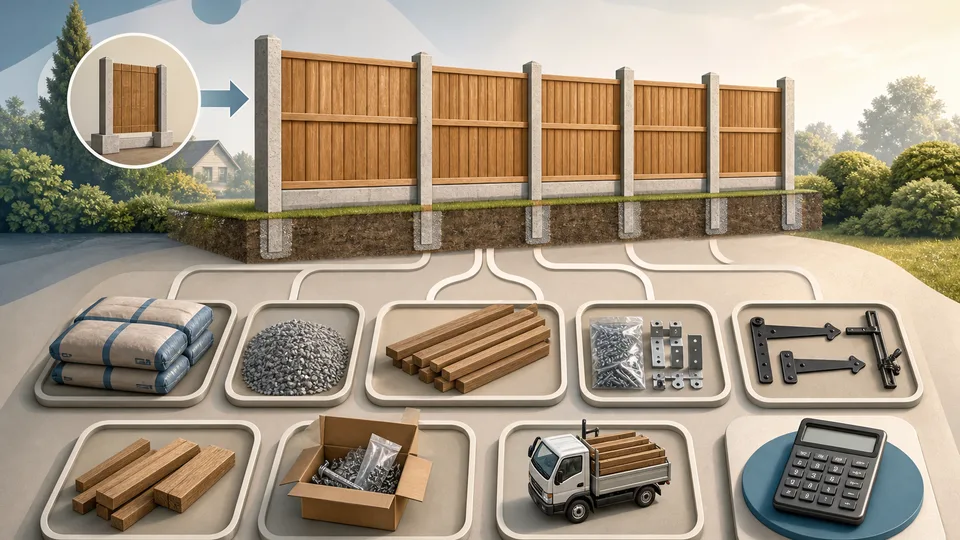
A fence order can look complete when the panels and posts are counted. Then the missing pieces start appearing: post mix, gravel boards, rails, clips, screws, brackets, hinge sets, latches, spare fixings, delivery, and small items that were never in the headline panel price.
That is why I separate the fence layout from the supporting materials. First work out the run length, panels, posts, and gates. Then build the add-on list around those counts. It is less glamorous than choosing panels, but it is the part that stops a DIY order or quote comparison from being misleading.
The Fence Concrete & Hardware Calculator starts from panel, post, and gate counts, then estimates post-mix bags, gravel boards, rails, fixing packs, gate hardware, spare allowance, delivery allowance, and rough material cost. For the first layout pass, use the Fence Calculator.
Start with the fence layout
The add-on materials only make sense after the basic layout is known. A straight run with six panels and seven posts has a different support list from a run with gates, corners, shorter panels, or mixed fence styles.
Use your sketch, supplier plan, or calculator result to identify panel count, post count, and gate count. Keep those numbers visible because nearly every supporting material is multiplied from them.
This article does not cover boundary responsibility, planning permission, wind-load design, or post-depth engineering. Those questions matter, but they are separate from a rough materials list.
Post mix is usually post count times an assumption
Post concrete or post mix is often estimated from bags per post. That sounds simple, but the assumption can vary by post size, hole depth, soil, post type, and product instructions.
For early budgeting, enter the number of bags you expect per post, then multiply by post count and round up. If the product instructions say two bags per post and you have nine posts, the raw count is eighteen bags before any spare allowance.
Do not use a calculator result to override product instructions or installer judgement. It is a buying-list estimate, not a structural design. For wider construction planning, the Concrete Bag Calculator can help with separate small pours, but fence post holes have their own product assumptions.
Gravel boards and rails depend on fence style
Some fence systems use one gravel board per panel. Some use none. Feather-edge or boarded fences may use rails rather than standard panels. Composite, slatted, closeboard, and decorative systems all have different supporting parts.
The calculator lets you enter boards per panel and rails per panel because there is no universal answer. If your system uses one gravel board below each panel, use that. If it uses two rails per bay, enter two. If the panels include their own frame, the rail assumption may be zero.
The useful habit is to make each assumption visible. A quote that includes rails, gravel boards, and fixings will look higher than a panel-only shopping basket, but it may be closer to the real order.
Fixing packs are rounded up
Fixings are easy to undercount because they are small. Clips, screws, brackets, repair plates, post caps, and panel supports are often bought in packs. If one pack covers four panels and you have seven panels, you need two packs, not 1.75 packs.
Rounding matters here. A small shortage of clips can pause a job just as effectively as missing a whole panel.
Keep spare allowance modest but real. Outdoor projects lose screws, hit awkward joins, and sometimes need replacement fixings when a hole or bracket does not behave as expected.
Gate hardware needs a separate line
Gates add more than a panel gap. Hinges, latches, bolts, handles, drop bolts, posts, bracing, and fixings can all affect the list. A heavy gate may need different hardware from a light garden gate.
The calculator can price hinge and latch sets, but it cannot choose hardware compatibility. Gate weight, opening direction, post type, and security needs should be checked with the supplier or installer.
If a quote includes gate hardware and your own basket does not, the comparison is not fair yet. Add the hardware line before deciding which option is cheaper.
Delivery and small-item allowance
Fence materials are bulky. Panels, posts, gravel boards, and bags of post mix may trigger delivery fees or require a minimum order. Small items can also add up: caps, clips, screws, brackets, sealant, disposal bags, or extra tools.
Use a delivery or small-items allowance if you do not know the exact price yet. It is better to include a visible placeholder than to pretend delivery is free and discover the real total later.
For broader garden projects, compare this list with the Material Take-Off Calculator when the fence sits beside paths, gravel, concrete, or other line items.
A simple worked example
Suppose a fence plan has eight panels, nine posts, and one gate. The chosen post mix assumes two bags per post, so the raw post-mix count is eighteen bags. If the system uses one gravel board per panel, that is eight boards. If it uses two rails per panel, that is sixteen rails.
If fixing packs cover four panels, eight panels need two packs before spare allowance. One gate may need one hinge set and one latch set. Add a small spare percentage and round quantities to whole bags, boards, rails, and packs.
The result is not a professional installation quote, but it is a much fuller shopping list than panels and posts alone.
Checklist before you trust the fence materials list
Before ordering, compare the calculator list with the fence system you actually intend to buy. Check whether panels need separate rails, whether gravel boards are included or separate, whether posts are timber, concrete, or metal, and whether the fixing packs match that system. A bracket or screw that works for one panel style may not work for another.
Also check the boring logistics: delivery weight, storage space, bag handling, spare boards, post caps, thresholds around gates, and whether any old fence disposal or ground preparation needs its own allowance. The calculator makes the add-on package visible, but product compatibility still matters. If the order is for a boundary fence, keep legal and neighbour questions separate from the material estimate.
It is also worth keeping a separate note for assumptions that came from product instructions rather than from the calculator. Bags per post, fixing-pack coverage, rail spacing, and gate hardware suitability should be traceable to the product or supplier. If those assumptions change, the buying list changes with them, and you can update the estimate without rethinking the whole fence run.
What this calculator should not decide
Do not use a material calculator to decide boundary law, planning permission, post depth, wind loading, ground suitability, slope handling, or structural adequacy. Those questions need local rules, supplier guidance, or professional judgement.
Use the calculator to make the support materials visible. Then confirm specifications: post size, hole depth, concrete product, gravel board compatibility, rail spacing, fixing type, gate weight, and delivery logistics.
A fence estimate is easier to trust when panels, posts, concrete, boards, rails, fixings, hardware, spare allowance, and delivery are all visible. That is the difference between a panel count and an order you can actually check.