
Math & Science
Useful Articles about Math & Science related Calculators.
Start here
Complete guides in Math & Science
Browse the main topic guides for math & science before diving into individual articles.
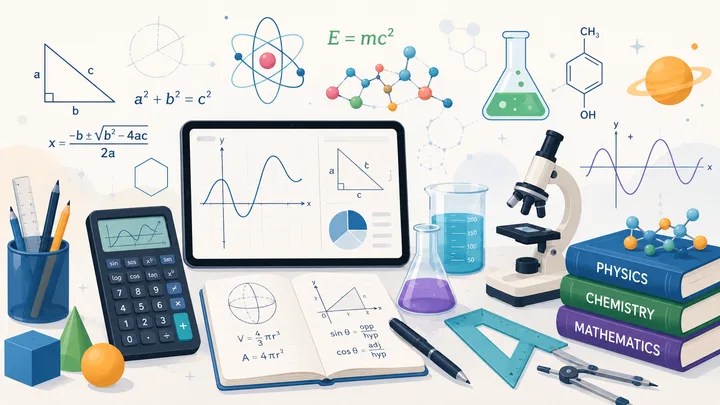
Math, Science & Problem Solving
Understand equations, formulas, percentages, measurements, physics, chemistry and practical problem-solving using clear explanations and useful calculators.
Read guide
Statistics, Probability & Data Interpretation
Statistics and probability appear everywhere now: news headlines, business dashboards, social media claims, sports analysis, health advice and AI systems. Yet a lot of people quietly feel uncomfortable interpreting numbers once percentages, averages or probabilities become more complicated. Part of the problem is that statistics often look more objective than they really are. The calculations themselves may be correct while the interpretation becomes misleading, incomplete or emotionally persuasive. This guide connects practical articles and calculators covering probability, averages, standard deviation and data interpretation in a more grounded and understandable way.
Read guide
Percentage, Ratio & Everyday Maths
A lot of everyday maths looks simple until numbers start interacting in practical situations. Discounts, percentage increases, ratios, budgeting and comparisons often become surprisingly confusing once multiple steps or changing values are involved. This guide explains how percentages, ratios and everyday maths actually work in real-world situations. It also connects supporting articles and calculators that help make practical calculations feel clearer and more intuitive instead of unnecessarily intimidating.
Read guide
Geometry, Area & Volume Calculations
Geometry often feels abstract in school until measurements start appearing in practical real-world situations. Flooring, paint coverage, storage space, construction, packaging and room dimensions all depend heavily on understanding area, perimeter and volume properly. This guide explains how geometry and measurement calculations work in everyday situations. It also connects supporting articles and calculators that help make shapes, dimensions and spatial calculations feel more practical and intuitive.
Read guide Math & Science
Normality in Chemistry: Why Equivalent Weight Changes the Answer
Normality depends on equivalents, not just moles. The same solution can have different normality values depending on the reaction context.
Read Article Math & Science
Logarithms Explained When the Base Actually Matters
Logs answer the question “what power gives this number?” The base changes the scale, the interpretation, and the calculator input you should use.
Read Article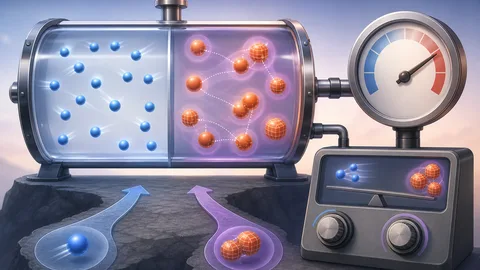 Math & Science
Why Real Gases Do Not Always Behave Like Ideal Gases
Van der Waals corrections account for particle attraction and particle volume, explaining why real gases can differ from ideal gas pressure estimates.
Read Article Math & Science
Statistical Significance for A/B Tests: What a Two-Proportion Check Can and Cannot Tell You
A/B significance checks compare two conversion rates, but statistical significance is not the same as practical significance or a guaranteed winner.
Read Article Math & Science
How Sample Size, Margin of Error, and Confidence Level Fit Together
Sample size planning connects confidence level, margin of error, expected proportion, population size, and response assumptions.
Read Article Math & Science
Serial Dilution Explained: Repeated Dilutions Without Losing the Factor
Serial dilution repeats dilution steps, so each transfer and diluent volume changes the cumulative dilution factor and step concentration.
Read Article Math & Science
How Three-Part Ratios Work in Recipes, Mixes, and Splits
Three-part ratios split a total into three linked shares. Learn how to scale from a total, one known part, or practical recipe and mix examples.
Read Article Math & Science
How to Calculate Dilution Before Stock Solution Math Goes Wrong
Dilution calculations are easier when stock concentration, target concentration, final volume, solvent amount, units, and C1V1 are separated first.
Read Article Math & Science
How to Calculate Density Before Mass and Volume Units Get Tangled
Density is simple once mass, volume, units, displacement measurement, and material comparison are separated before the calculation.
Read Article Math & Science
How to Calculate Molar Mass Before Grams and Moles Get Mixed
Molar mass connects chemical formulas to grams and moles. Learn how element counts, atomic masses, parentheses, hydrates, and conversions fit together.
Read Article Math & Science
How to Use Gas Laws Before Pressure, Volume, and Temperature Drift
Gas law calculations are easier when pressure, volume, temperature, moles, constants, unit conversion, and the chosen relationship are separated first.
Read Article Math & Science
How to Calculate Reaction Yield Before Lab Results Look Wrong
Reaction yield compares theoretical and actual product amounts. Learn how limiting reagent, losses, purity, units, and percent yield fit together.
Read Article Math & Science
How to Use Z-Scores Before Normal Distribution Context Gets Confused
A z-score shows how far a value sits from the mean in standard deviation units, but normal distribution context and percentiles need careful interpretation.
Read Article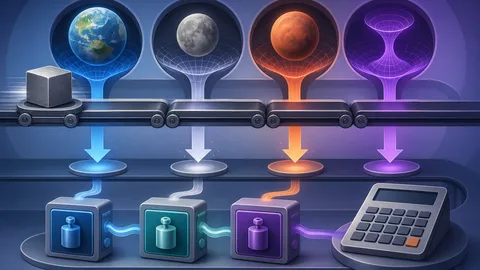 Math & Science
How to Calculate Weight Force Before Mass Gets Mistaken
Weight force is not the same as mass. Learn how mass, local gravity, newtons, planet comparisons, and force interpretation fit together.
Read Article Math & Science
How to Use Acceleration Kinematics Before Motion Gets Muddled
Constant-acceleration problems are easier when initial velocity, final velocity, time, acceleration, displacement, average velocity, units, and the missing variable are separated first.
Read Article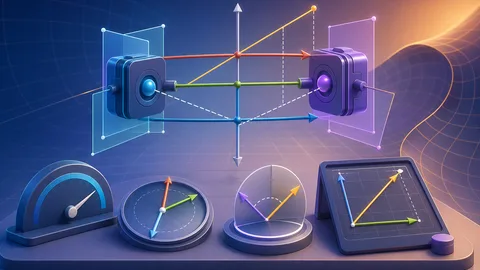 Math & Science
How to Use 3D Distance and Vectors Before Space Gets Flattened
Three-dimensional distance and vector problems are clearer when x, y, and z changes, magnitude, dot product, angle, direction, and units are handled separately.
Read Article Math & Science
How to Solve Systems of Equations Before Elimination Goes Sideways
Systems of equations are easier when the unknowns, coefficients, constants, graph meaning, substitution path, elimination path, and answer check are separated before you start.
Read Article Math & Science
Why Pressure Increases with Depth: Hydrostatic Pressure Explained
Pressure at depth is not just ordinary force divided by area. Learn why water pressure rises as depth increases, how P = rho g h works, and when to use a hydrostatic pressure calculator.
Read Article Math & Science
What pH Means on a Scale That Runs Backwards
pH is a logarithmic acidity scale, so one pH step is not a small ordinary difference. It represents a tenfold change in hydrogen ion concentration.
Read Article Math & Science
Distance Between Two Points Without Losing the Coordinates
The distance formula is easier to trust when you keep the two points, axis changes, units, and square root step separate before using the calculator.
Read Article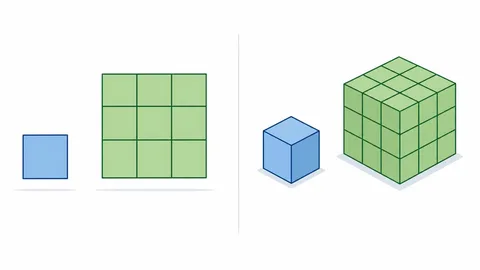 Math & Science
How Area and Volume Get Confused (And How to Calculate Both Correctly)
Area and volume sound similar but measure completely different things — and mixing them up costs real money. Here is how to calculate both correctly, with examples you can actually use.
Read Article Math & Science
Construction Measurement Mistakes
A grounded, human explanation of construction measurement mistakes using real-world intuition, relatable examples and practical mathematical thinking.
Read Article Math & Science
Correlation Does Not Mean Causation
A grounded, human explanation of correlation does not mean causation using real-world intuition, relatable examples and practical mathematical thinking.
Read Article Math & Science
Everyday Maths You Use Without Realising
A grounded, human explanation of everyday maths you use without realising using real-world intuition, relatable examples and practical mathematical thinking.
Read Article Math & Science
How Misleading Graphs Change Perception
A grounded, human explanation of how misleading graphs change perception using real-world intuition, relatable examples and practical mathematical thinking.
Read Article Math & Science
How Much Paint Do You Really Need
A grounded, human explanation of how much paint do you really need using real-world intuition, relatable examples and practical mathematical thinking.
Read Article Math & Science
How To Calculate Probability
A grounded, human explanation of how to calculate probability using real-world intuition, relatable examples and practical mathematical thinking.
Read Article Math & Science
How To Calculate Room Area Correctly
A grounded, human explanation of how to calculate room area correctly using real-world intuition, relatable examples and practical mathematical thinking.
Read Article Math & Science
Mean Median Mode Explained
A grounded, human explanation of mean median mode explained using real-world intuition, relatable examples and practical mathematical thinking.
Read Article Math & Science
Probability Vs Possibility
A grounded, human explanation of probability vs possibility using real-world intuition, relatable examples and practical mathematical thinking.
Read Article